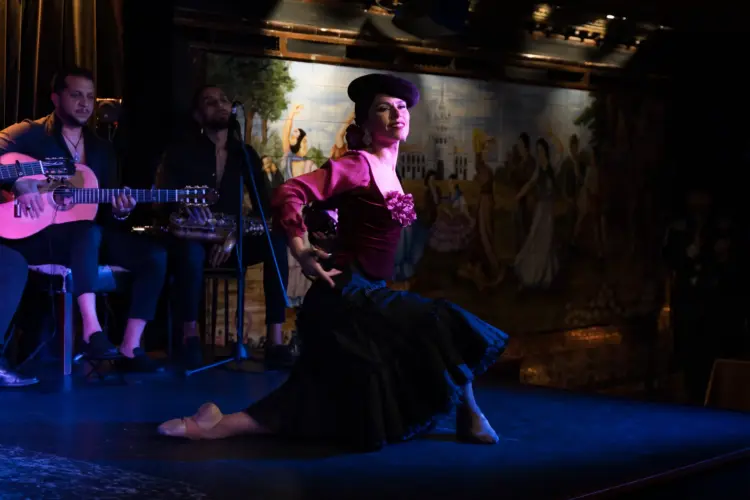
Bulerías: the most festive and free-spirited palo in flamenco
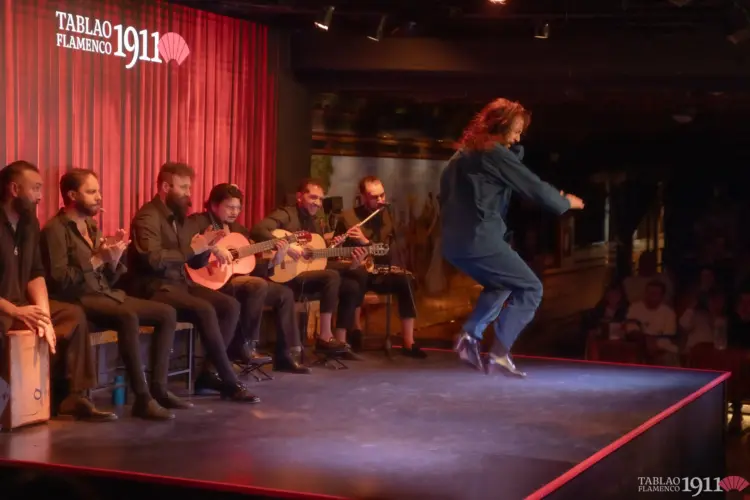
If you’ve seen flamenco live and, at some point, the whole company stood up —amid palmas, laughter and flourishes— for each artist to step out and dance a few moves, what you saw were bulerías. This is the palo of the fiesta. The one that sets the room alight just when the night seemed to be winding down.
Let’s look at what they are, where they come from and why they almost always come at the end.
What are bulerías
Bulerías are the most joyful and festive palo in flamenco. Fast, alive, cheeky at times. And, above all, the freest: there’s room here for the joke, the unexpected twist and the spark of the moment. No two bulerías are ever the same, because much of their charm lies in improvisation.
Cante, guitar and dance blend with no fixed order. One starts, another answers, someone gets up to dance a “patá” and sits back down. This is flamenco at its most social — the flamenco of the gathering and the party.
The origin of bulerías (from the soleá to Jerez)
Bulerías are a young palo. They emerged at the end of the 19th century, in Jerez de la Frontera, and not out of nowhere: they appeared as the fast-paced finale of the soleá. Singers used to close the soleá by picking up the tempo and letting go of the solemnity, and out of that runaway ending a palo with a life of its own was born.
There’s no single version of the name. Most point to two clues: “burla” (jest), for that playful, slightly mocking character, and “bulla” (racket), for the noise of the party. Both fit.
Over time, bulerías rubbed off on other festive palos —something similar to what happens with the flamenco rumba— and today they are one of the hallmarks of flamenco.
The compás of the bulería
Here’s the heart of the matter. Bulerías move in a twelve-beat cycle, the same metric family as the soleá or the alegrías. The difference is the speed and the syncopation: the accents fall where you don’t expect them, and that gives it its edgy, danceable feel.
For many, it’s the hardest compás to “get”. You can have a good ear and still lose it. That’s why, when you see a whole company keeping the compás with their palmas without missing a beat, you’re watching years of craft. The palmas, in fact, are another instrument: they mark, answer and push the dancer along.
Bulerías de Jerez
If bulerías have a capital, it’s Jerez. The neighbourhoods of Santiago and San Miguel carry them in their blood, passed down from parents to children across whole flamenco families.
Bulerías de Jerez have an unmistakable stamp: a fast, tight compás, very inward, with a particular swing that’s hard to imitate anywhere else. It’s no coincidence that people speak of them as a school in themselves. Cádiz, Utrera and Lebrija have their own too, but Jerez is the benchmark.
The guitar in the bulería
The guitar in the bulería doesn’t just accompany: it prods, provokes, pushes. The playing is fast and percussive, with sharp rasgueos and short falsetas that come and go to dialogue with the cante and the dance.
It’s one of the moments where the guitarist shines most, because they have to hold that devilish compás and, at the same time, leave room for everyone else to breathe. When it works, guitar, palmas and feet sound like a single rhythm machine.
Bulerías as the closing of the show
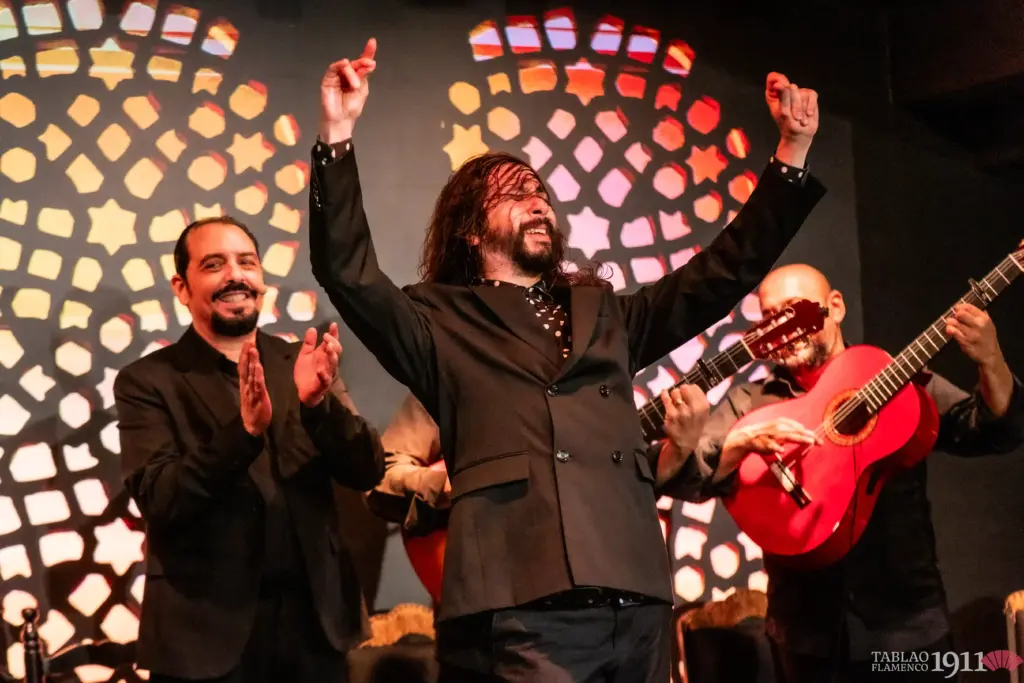
The bulerías finale, with the company cheering along, at Tablao Flamenco 1911.
There’s a reason they almost always come at the end. Bulerías are the grand finale: the moment when the company lets loose, laughs, and each artist steps out to finish with their own stamp. The fourth wall falls. What was solemn before is now celebration.
Watching them recorded is fine. Living them live is another thing: you feel how the air in the room changes, how the audience starts clapping along almost without realising. At Tablao Flamenco 1911 that final release happens every night. If you want to feel it up close, take a look at our flamenco shows in Madrid and let yourself be carried away by the most festive palo in flamenco.
Featured posts
Flamenco shows

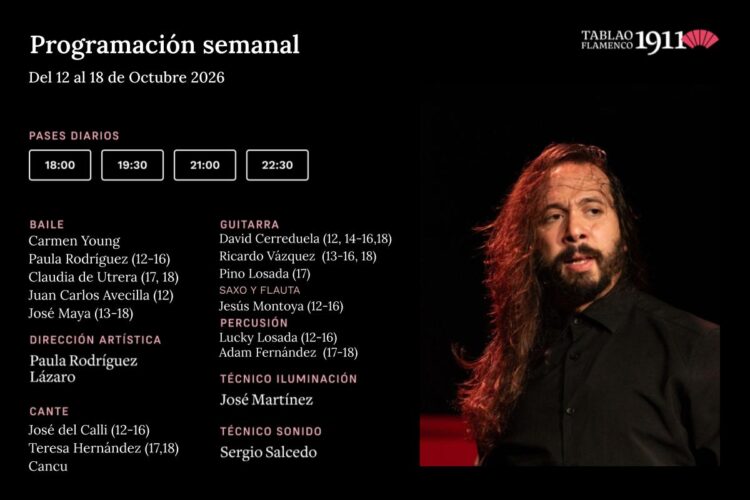
From 13 to 18 October
José Maya on stage at Tablao Flamenco 1911
This week, one of the most powerful names in contemporary flamenco shines once again on our stage: José Maya.
From 12 to 18 October
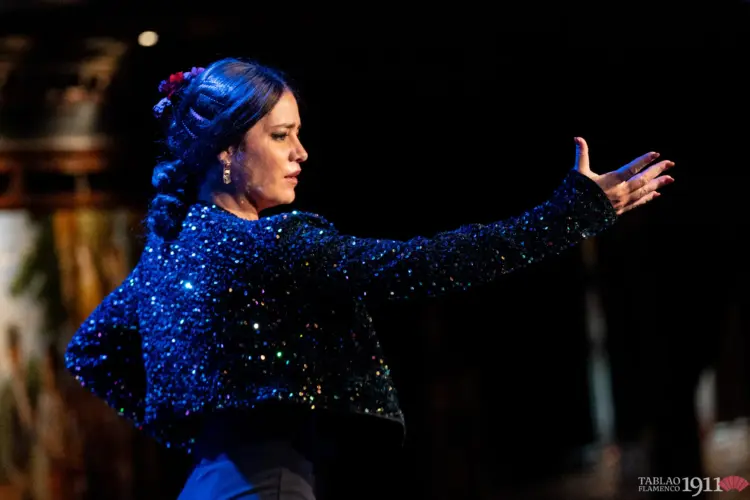
Flamenco Madrid Daily Show
This week, our flamenco ensemble renews itself to offer you an experience full of nuances and overflowing talent.
From 12 to 18 October
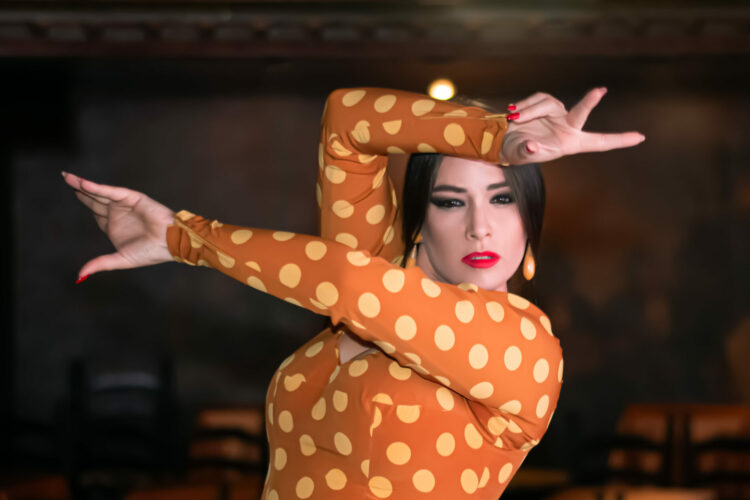
Carmen Young: elegance turned into dance at Tablao 1911
She crossed an ocean to learn to dance flamenco. Today she dances it with an elegance that can't be taught.
From 12 to 16 October
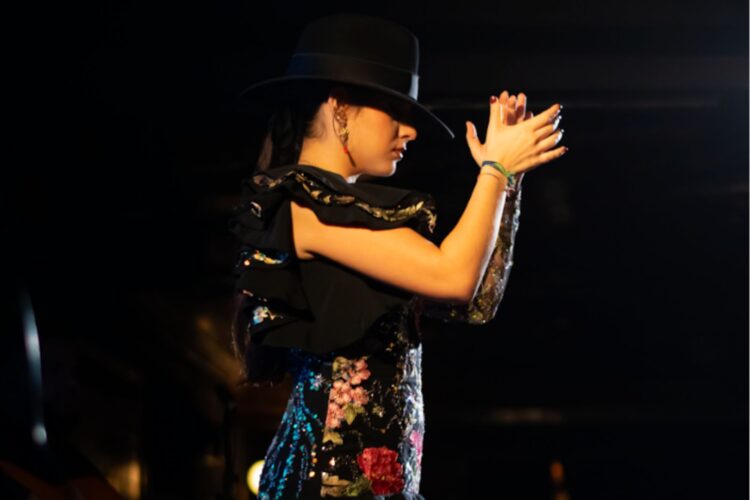
Paula Rodríguez returns to 1911
Paula Rodríguez, pure passion, strength, and elegance!
From 17 to 18 October
The Old Soul of a New Talent: Claudia de Utrera
We invite you to discover the strength and maturity of Claudia de Utrera, a dancer who proves that art