Flamenco rumba: origin, rhythm and the most festive palo of flamenco
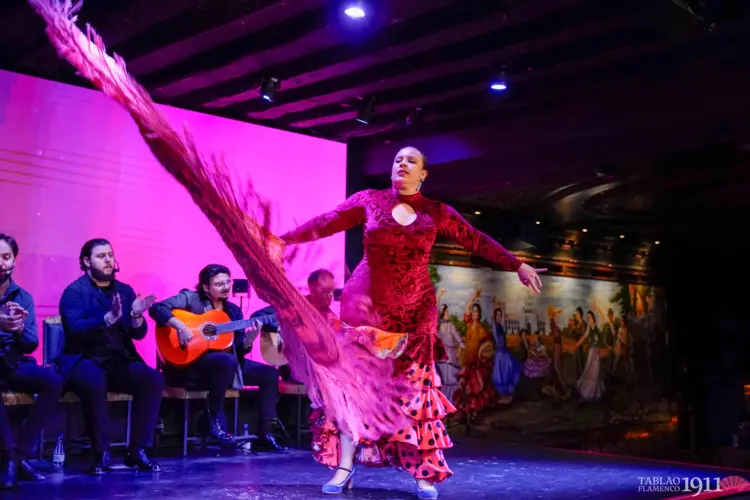
There is a moment in every tablao when the atmosphere changes. The cante opens up, the guitar accelerates, the palmas become redobladas and something in the room starts moving on its own. That is the rumba. It gives no warning. It just arrives.
What is flamenco rumba
Flamenco rumba is one of the most popular and recognisable palos of flamenco. Joyful, danceable, contagious. But it is not just a party — it is also history, a mix of cultures and one of the clearest proofs that flamenco has never been a closed art form.
Within the system of palos, the rumba occupies a peculiar place. It is not jondo. It does not seek the anguish of the seguiriya or the solemnity of the soleá. Its function is different: to open the space, spread the rhythm, make the audience stop being spectators and start participating with their bodies.
The rumba is the palo that proves flamenco knows how to laugh.
The origin of flamenco rumba
To understand the rumba you have to cross the Atlantic. Twice.
From Cuba to Cádiz: the journey of the rumba
In the nineteenth century, the ships arriving at the port of Cádiz brought more than goods. They brought music. The Cuban rumba — a genre of African roots, binary rhythm and festive character — arrived with sailors, musicians and merchants to the Andalusian ports.
Cádiz, Seville and Barcelona were the entry points. And in those ports there were gypsy musicians who listened, absorbed and transformed. What came from Cuba did not stay the same. It crossed with the Spanish guitar, with the palmas, with the Andalusian character. And from that crossing came something that had not existed before: flamenco rumba.
It is the same process that explains the origin of flamenco as an art form — a mix of cultures that, instead of diluting, intensifies.
The gypsy rumba and its role in flamenco
Gypsy musicians were the main architects of this transformation. They took the Caribbean rhythm and passed it through their own filter — more percussion, more guitar rasgueo, more body. The gypsy rumba that emerged from that process had something the Cuban rumba did not have: duende.
It is no coincidence that flamenco rumba and gypsy rumba are practically the same thing in practice. The gypsy people made a foreign rhythm their own and turned it into flamenco. That is exactly what they have always done.
Characteristics of flamenco rumba
The rumba compás: rhythm and energy
Flamenco rumba works in a four-beat compás — the same territory as tangos and tientos. But where tientos are slow and tangos have weight, the rumba is light. Fast. With a festive air that fills everything.
The rhythm is marked with palmas redobladas and a characteristic guitar rasgueo that functions almost as percussion. The accents fall on the first and third beats, creating a sense of continuous swaying that is almost impossible to resist.
Listening to the rumba without moving is an active effort. Most people lose that battle.
Key artists of flamenco rumba
Flamenco rumba had its explosion in the twentieth century. In Barcelona, artists like Peret and El Pescaílla created what is known as rumba catalana — a more urban and commercial version that took the rhythm to international stages and put it on the radio.
In Andalusia, El Lebrijano and Los Chichos fused the rumba with tangos and bulerías, creating a new sound that connected with the most popular and urban flamenco.
Later, Paco de Lucía, Ketama and Niña Pastori incorporated it into more contemporary languages. The rumba crossed into pop, jazz and Latin music without losing its roots. That capacity for fusion without dissolution is what makes it unique.
Flamenco rumba today: from tablaos to stages around the world
Today the rumba is one of the most used palos for experimentation and fusion. Its binary compás, its openness and its mestizo character make it compatible with almost any influence without losing its identity.
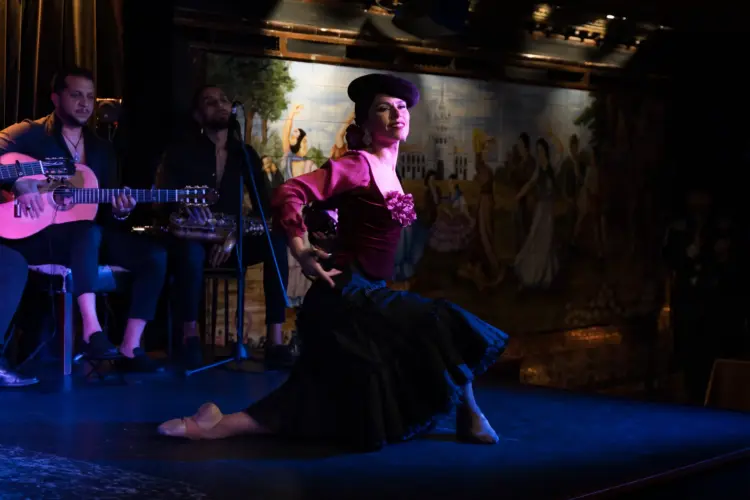
In tablaos, the rumba usually appears at the closing moments — the palo that caps the show when the audience is already inside and the tablao wants to go up. It is not just any ending. It is the moment when jondo art and celebration shake hands.
At Tablao Flamenco 1911, the rumba sounds as it should: live, a few metres away, with a real guitar and artists who have carried that rhythm in their bodies since they can remember.
If you want to find out, here are the tickets to the best flamenco show in Madrid.
Featured posts
Flamenco shows

From 13 to 18 October
José Maya on stage at Tablao Flamenco 1911
This week, one of the most powerful names in contemporary flamenco shines once again on our stage: José Maya.
12 October
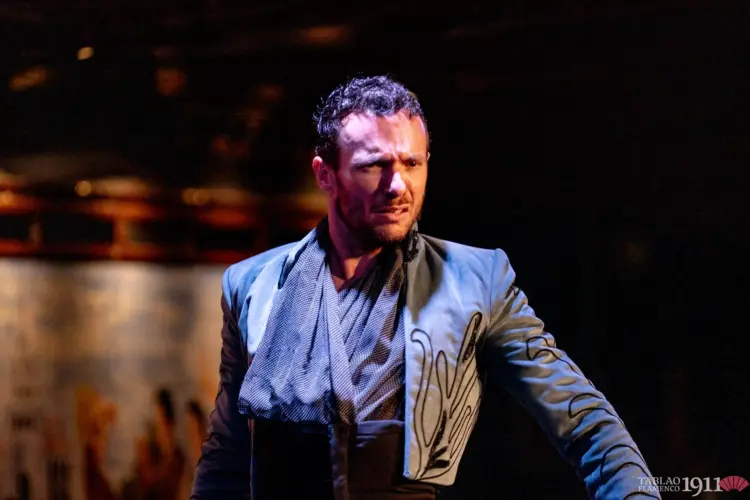
Juan Carlos Avecilla: the force of Cádiz in the Cathedral of Flamenco
Only the greats set foot on the oldest stage in the world. The force of Cádiz in Juan Carlos Avecilla, just a couple of metres from you.
From 12 to 18 October
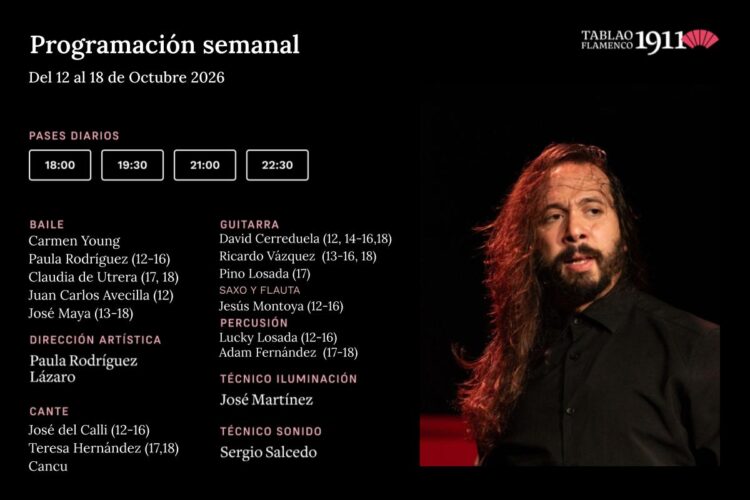
Flamenco Madrid Daily Show
This week, our flamenco ensemble renews itself to offer you an experience full of nuances and overflowing talent.
From 12 to 18 October
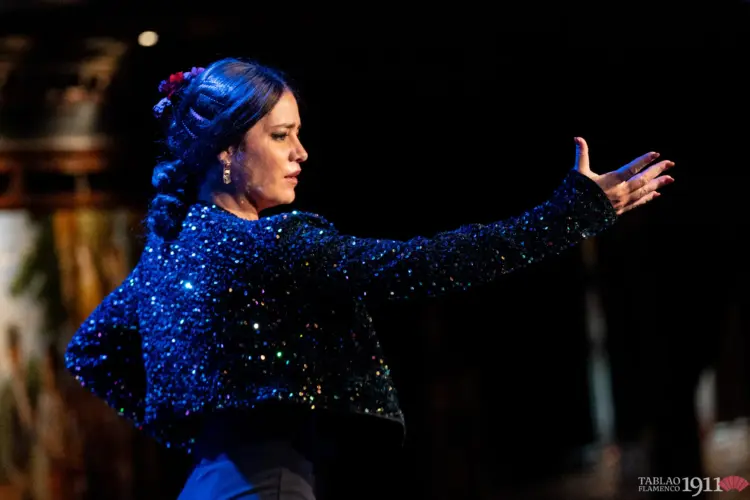
Carmen Young: elegance turned into dance at Tablao 1911
She crossed an ocean to learn to dance flamenco. Today she dances it with an elegance that can't be taught.
From 12 to 16 October
Paula Rodríguez returns to 1911
Paula Rodríguez, pure passion, strength, and elegance!
From 17 to 18 October
The Old Soul of a New Talent: Claudia de Utrera
We invite you to discover the strength and maturity of Claudia de Utrera, a dancer who proves that art