Castanets in Flamenco: Tradition, Myth, and Reality on Stage
Forget the tourist postcards for a moment. If you close your eyes and think of Spain, you will probably visualize a ruffled dress and a pair of castanets. However, the truth of the “arte jondo” (deep flamenco) is much deeper than that myth. To understand the true use of castanets in flamenco, it is necessary to separate commercial folklore from historical reality, and understand exactly when, how, and why this instrument is used in a tablao.
Flamenco castanets: why they are part of the popular imagination
In advertising and history, facts are more convincing than opinions. And the facts about the history of castanets are astonishing: their origin is not Andalusian. They were invented by the Phoenicians over three thousand years ago. Known in antiquity as crotales, they were carved from ivory or common wood and accompanied rituals throughout the Mediterranean.
Over the centuries, Spanish artisans perfected their acoustics by using noble and hard woods (ebony, granadillo, or rosewood), elevating them to the flamenco and classical castanet instrument we know today.
In the 20th century, legendary figures such as La Argentinita or Carmen Amaya took them to stages all over the world. Thus was born an unbreakable visual association that cinema and theater forever engraved in the international collective imagination.
Are castanets used in traditional flamenco?
Here is the truth that surprises most spectators: in the purest and most orthodox flamenco, the use of castanets is the exception, not the rule.
To understand why, one only needs to look at the differences between castanets in flamenco and in Spanish dance. In Classical Spanish Dance and the Escuela Bolera, this instrument is the absolute and academic protagonist. On the contrary, with castanets used in pure flamenco dance (when interpreting a deep soleá, a taranto, or a seguiriya), the artist needs to have their hands free.
The essence of flamenco is to transmit heartbreak and passion through the organic movement of the fingers and wrists; tying the hands with wood would limit the body expression that gives soul to the dance.
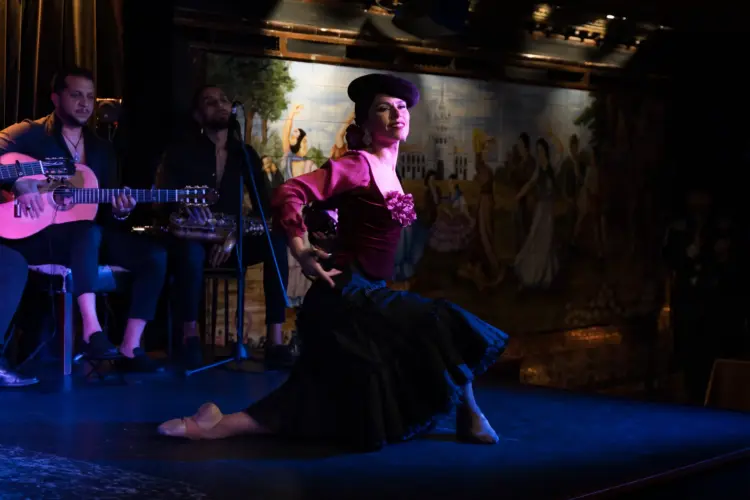
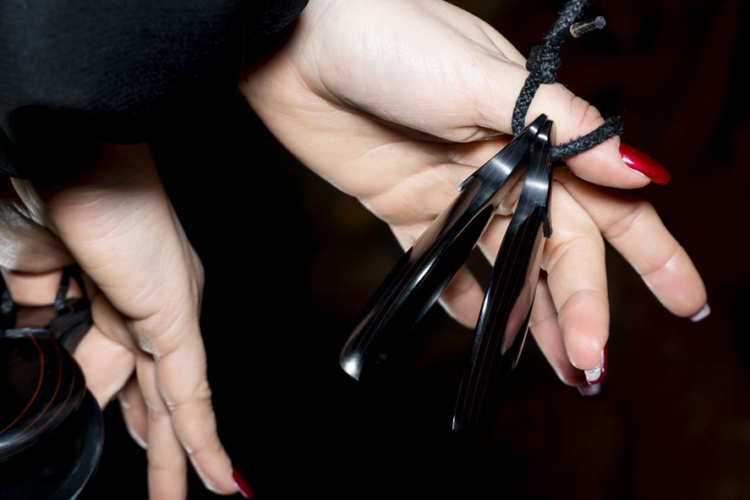
So, how are castanets used in this art? They are reserved almost exclusively for festive styles, “ida y vuelta”, or folkloric styles, such as sevillanas, fandangos de Huelva, or guajira. Their execution is a work of rhythmic engineering: the high-pitched castanet (the “female”) is placed in the right hand to dictate the ringing, while the low-pitched one (the “male”) goes in the left to mark the base beat.
If castanets are not the engine of deep flamenco, what sets the rhythm? The human being itself. In the arte jondo, the dancer becomes their own percussion instrument.
Through the footwork (with its fierce variations of sole, heel, and toe) and the art of hand-clapping (muffled or clear), the artists build an impeccable sonic architecture. If you want to understand the mathematics that sustain authentic singing and dancing, we invite you to discover how flamenco rhythm and compás work. That is where the true authority of the tablao resides.
Castanets and flamenco: cultural meaning and perception
Castanets are, unquestionably, a cultural treasure and a historical amulet in Spain. But in the sacred ecosystem of a centuries-old tablao, their appearance is a measured resource, not a constant ornament. The intelligent spectator does not seek an uninterrupted noise of wood, but the sincere conversation between a guitar, a broken voice, and the rhythm of feet.
Do not settle for the surface of clichés. We invite you to witness the naked power of this art. Book your table and experience firsthand the best flamenco show in Madrid, where tradition, technical rigor, and truth are demonstrated every night on stage, just a few meters away from you.
Featured posts
Flamenco shows

From 13 to 18 October
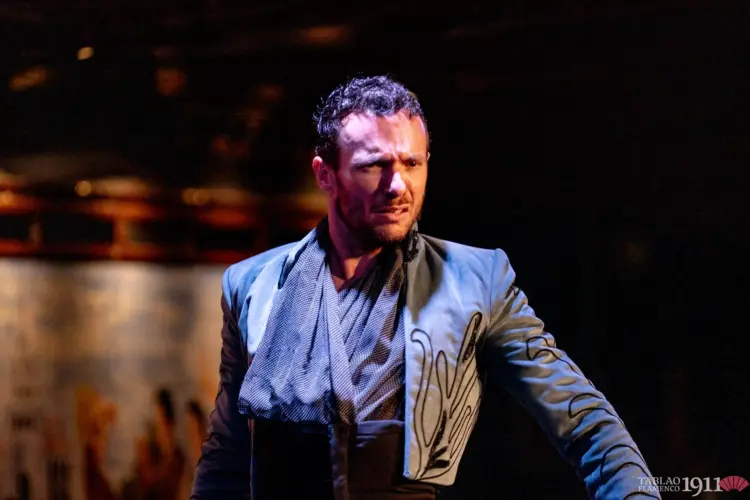
José Maya on stage at Tablao Flamenco 1911
This week, one of the most powerful names in contemporary flamenco shines once again on our stage: José Maya.
12 October
Juan Carlos Avecilla: the force of Cádiz in the Cathedral of Flamenco
Only the greats set foot on the oldest stage in the world. The force of Cádiz in Juan Carlos Avecilla, just a couple of metres from you.
From 12 to 18 October
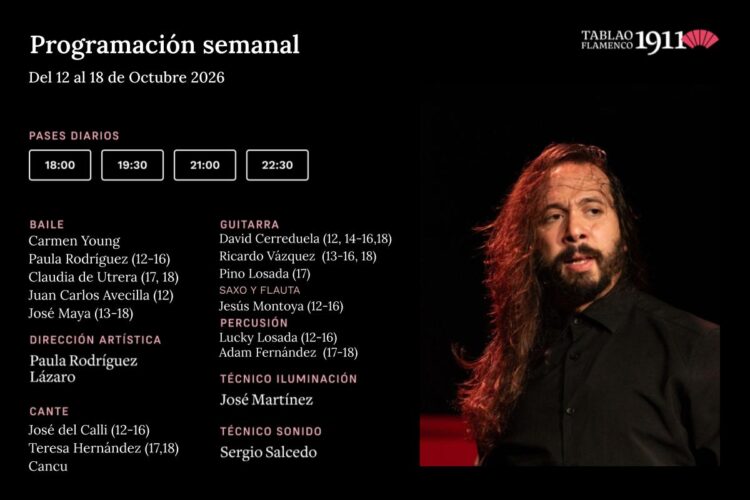
Flamenco Madrid Daily Show
This week, our flamenco ensemble renews itself to offer you an experience full of nuances and overflowing talent.
From 12 to 18 October
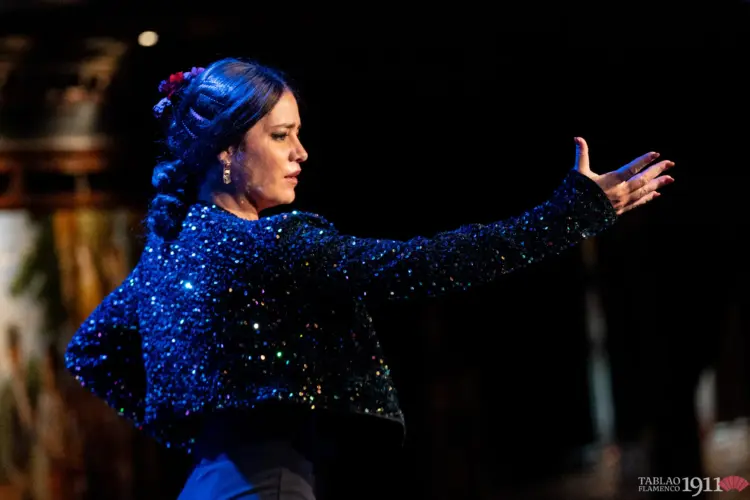
Carmen Young: elegance turned into dance at Tablao 1911
She crossed an ocean to learn to dance flamenco. Today she dances it with an elegance that can't be taught.
From 12 to 16 October
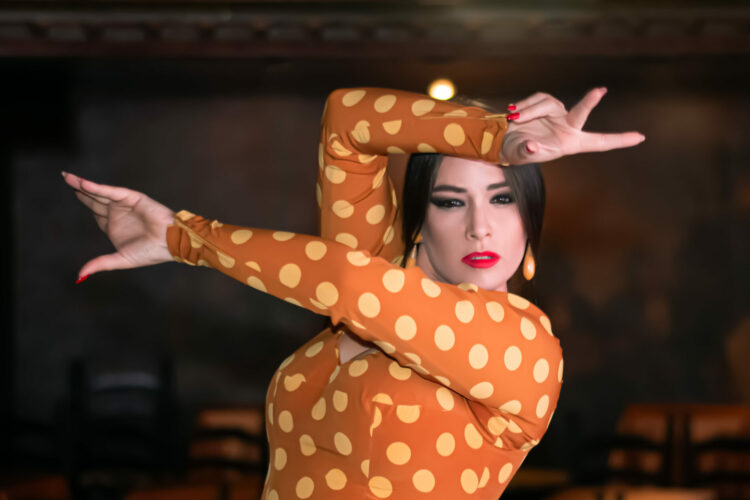
Paula Rodríguez returns to 1911
Paula Rodríguez, pure passion, strength, and elegance!
From 17 to 18 October
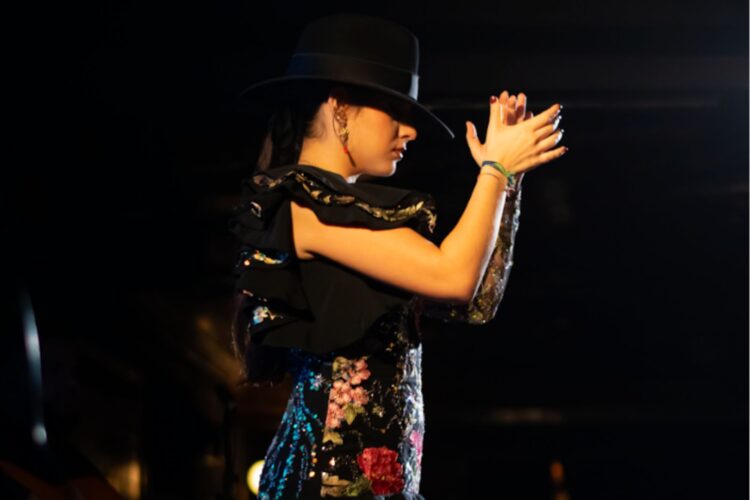
The Old Soul of a New Talent: Claudia de Utrera
We invite you to discover the strength and maturity of Claudia de Utrera, a dancer who proves that art