The flamenca dress: history, types and when it’s worn
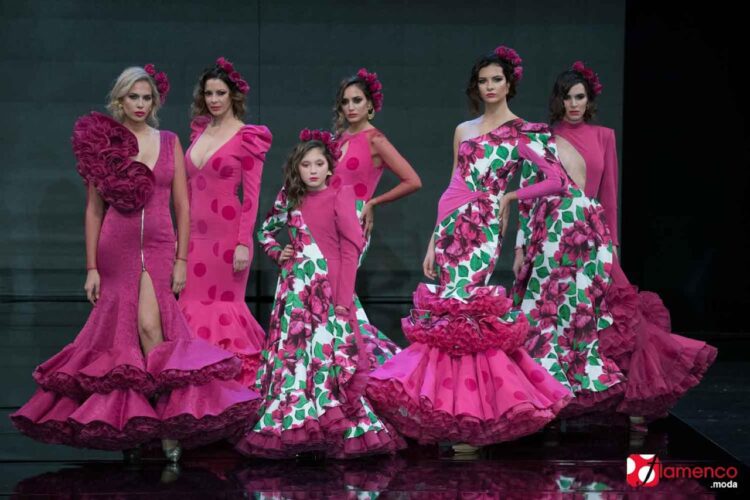
It is probably the most recognisable Spanish garment in the world. Polka dots, ruffles, a marked waist and a sweep that takes up the whole street. The flamenca dress wasn’t born for the stage: it was born for work.
Let’s look at exactly what it is, where it comes from, what types there are, how it is completed and when it is really worn.
What the flamenca dress is (or is it a gypsy dress?)
The flamenca dress is the women’s dress worn at the fairs and pilgrimages of southern Spain. Fitted to the hip, with the skirt opening into ruffles and, very often, a polka-dot print.
And here comes the first clarification, because it causes confusion: in Andalusia many call it “traje de gitana” (gypsy dress), which is the traditional name. “Traje de flamenca” is the term that has taken over with time, especially abroad. Both are correct and refer to the same garment; only the custom of each place and each generation changes.
What shouldn’t be confused is the fair dress with dance costume. They look alike, but they are not the same thing, and at the end of this article you’ll see why.
The origin: from work smock to fair dress
Here’s the lovely thing about this garment: nobody designed it to be shown off. It comes from work clothes.
At the nineteenth-century cattle fairs, the women who accompanied the traders wore simple percale smocks with ruffles, comfortable and cheap, for walking among animals and dust. Those humble smocks began to draw attention for their grace, and little by little they moved up in status: better fabrics, more ruffles, more adornment.
What was workwear ended up being the official dress of the celebration. That leap consolidated throughout the twentieth century, until it became the only Spanish regional dress that follows fashion, with collections and trends every season.
Types of flamenca dress
There isn’t one flamenca dress, there are many. These are the cuts you’ll see most:
Canastero. The most gypsy and the most recognisable: very tight to the knees and with one or two large ruffles that open all at once. It shapes the figure and forces you to walk with a certain air, which is part of its charm.
Ruffled. The classic of the feria: several tiered ruffles from the hip, with plenty of sweep. The more ruffles, the more movement and the more weight.
Mermaid cut. Fitted well down the leg, with the sweep concentrated at the bottom. Elegant and streamlined.
And then there are the variations in sleeve, neckline and skirt that change every season. Because, we insist, the flamenca dress has a fashion of its own: what’s worn one year isn’t what was worn five years ago.
The accessories: peineta, flower and shawl
The dress is only half of it. The other half are the accessories, and that’s where you can tell who knows:
- The flower, placed in the hair, large or discreet, to one side.
- The flamenco peineta, which gives height to the updo.
- The mantoncillo, crossed over the shoulders and knotted at the chest.
- The zarcillos, those large earrings that swing as you walk.
- The embroidered mantón de Manila, for cool nights and for the grandest look.
The rule is the same as with everything flamenco: balance before quantity. A well-worn dress with two well-chosen accessories always beats an overloaded one.
When it’s really worn (and how to go to a feria without one)
Let’s be clear. The flamenca dress is worn at the Feria de Abril, at village fairs and at pilgrimages such as El Rocío. That’s where it makes sense and where you’ll see it in the thousands.
And an honest answer to a very common question: you don’t need a flamenca dress to go to a feria. Plenty of people go without one, and nothing happens. A ruffled skirt, a simple dress with a flower in your hair or a mantoncillo over something neutral all work just as well. What isn’t done is dressing up in costume: better to go comfortable with a nod to the style than to force a rented dress that doesn’t suit you.
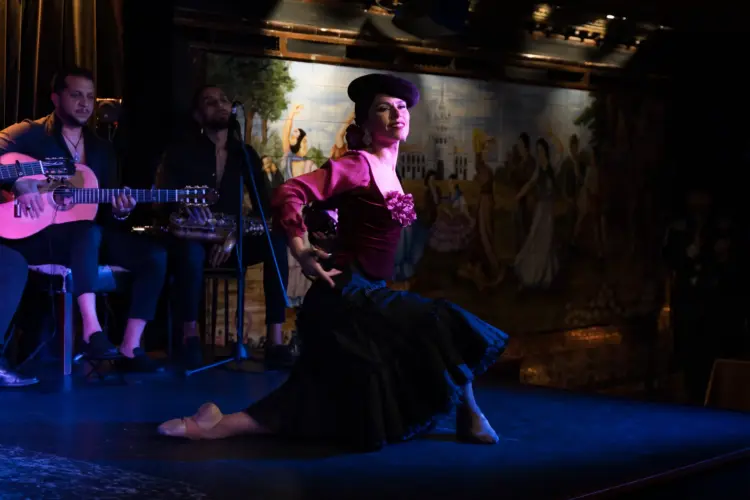
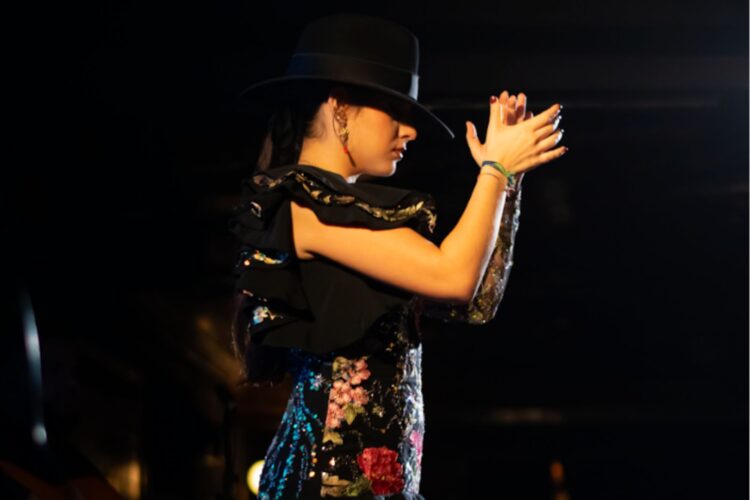
And in a tablao, what do people wear? Another clarification is in order: the bailaora doesn’t dance in a fair dress. On stage they use dance costume —full skirts, bata de cola— designed for movement, and the audience comes as they please, with no dress code. Just as with the peineta or the Cordovan hat, everything has its moment.
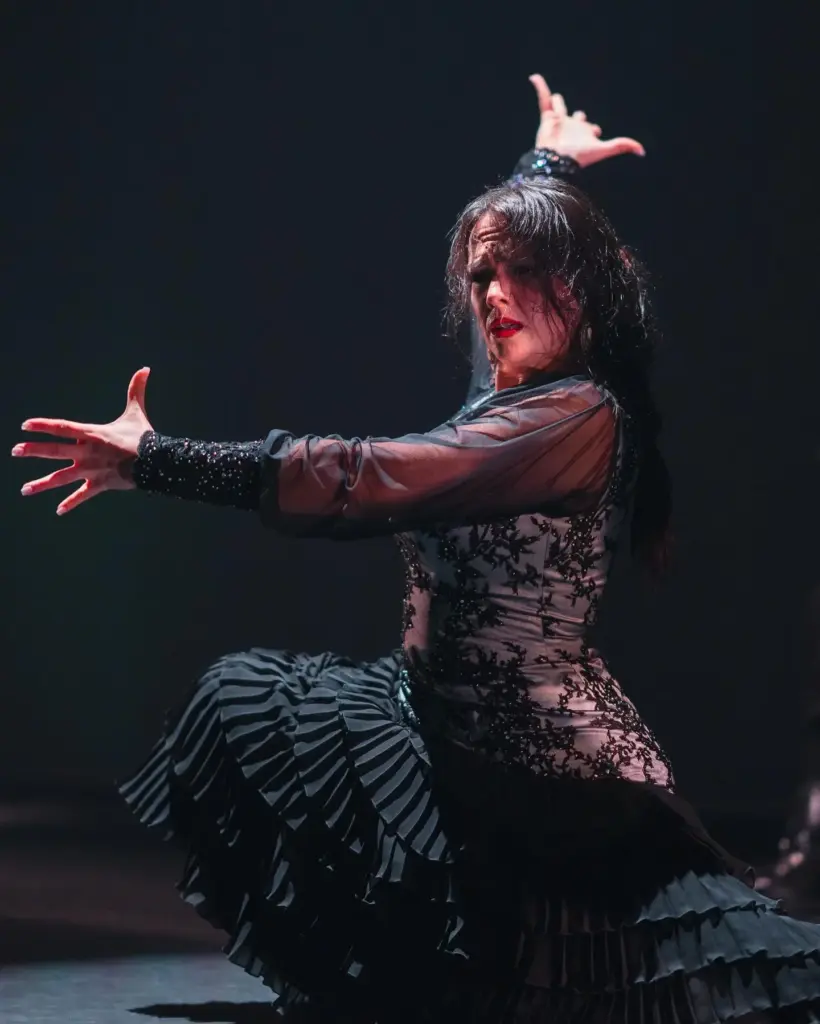
That said, the image of the flamenca dress is inseparable from the image of flamenco around the world, and seeing it in its element is priceless. If you want to experience the art behind all of this, come to our flamenco tablao in Madrid and feel it a couple of metres away.
Featured posts
Flamenco shows

From 13 to 18 October
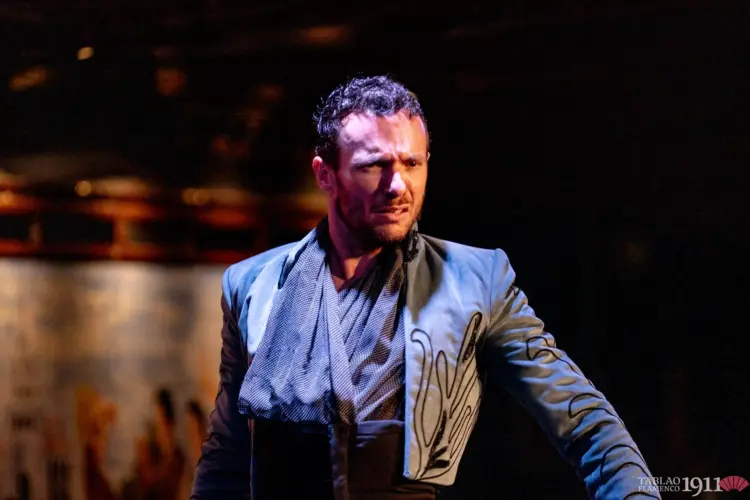
José Maya on stage at Tablao Flamenco 1911
This week, one of the most powerful names in contemporary flamenco shines once again on our stage: José Maya.
12 October
Juan Carlos Avecilla: the force of Cádiz in the Cathedral of Flamenco
Only the greats set foot on the oldest stage in the world. The force of Cádiz in Juan Carlos Avecilla, just a couple of metres from you.
From 12 to 18 October
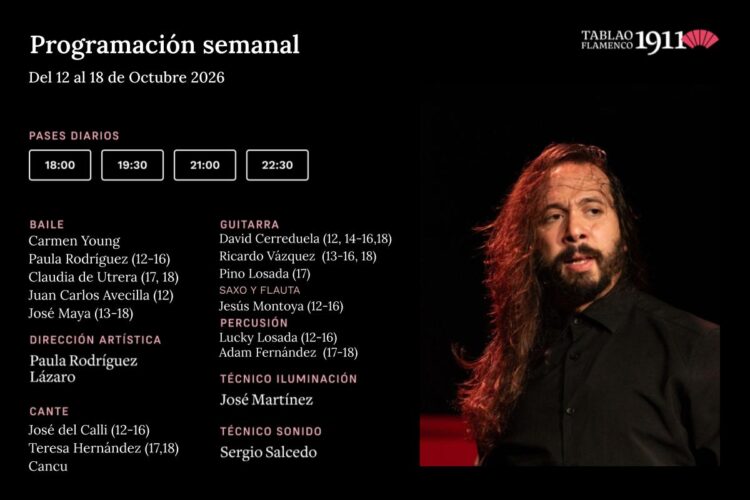
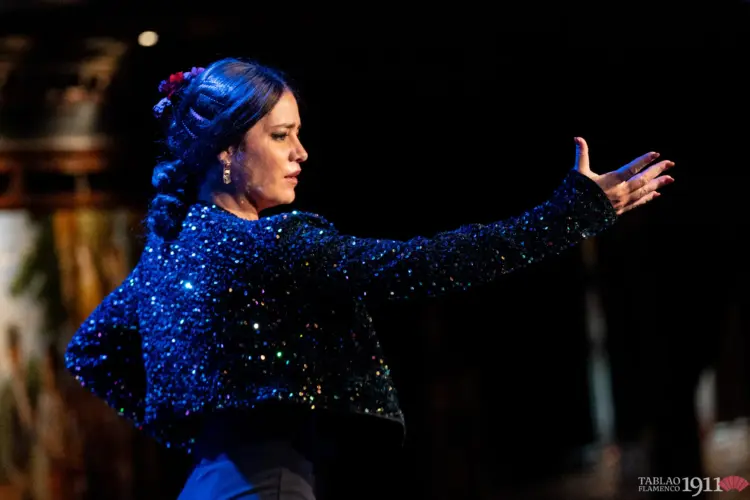
Flamenco Madrid Daily Show
This week, our flamenco ensemble renews itself to offer you an experience full of nuances and overflowing talent.
From 12 to 18 October
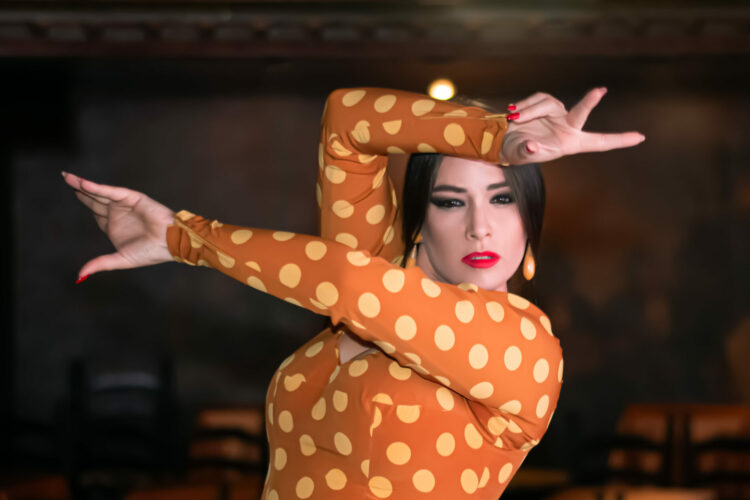
Carmen Young: elegance turned into dance at Tablao 1911
She crossed an ocean to learn to dance flamenco. Today she dances it with an elegance that can't be taught.
From 12 to 16 October
Paula Rodríguez returns to 1911
Paula Rodríguez, pure passion, strength, and elegance!
From 17 to 18 October
The Old Soul of a New Talent: Claudia de Utrera
We invite you to discover the strength and maturity of Claudia de Utrera, a dancer who proves that art