Alegrías Flamenco: Origin, Rhythm, and the Luminous Art of Cádiz
It’s often said that flamenco is only a liturgy of pain and shadow, but that claim falls apart the moment the compás of Cádiz comes into play. There is a shore of the deep art where light floods everything: the alegrías. They are not merely a celebration, but one of the most rigorous and luminous disciplines of the Bay; a display of sea salt and mastery that proves depth need not always be born of tragedy.
What are alegrías in flamenco?
To grasp the scale of this style, we must look at the facts. The alegrías palo in flamenco is the king of the cantiñas group (the festive cantes of Cádiz). It is no minor tavern song, but a vibrant musical structure that demands impeccable technique, elegance and mischief from its artists.
Unlike the dark styles, the alegrías don’t seek to shrink the listener’s heart, but to inject pure vitality. Their melody is built on major keys, giving them that bright, expansive, festive character that honours their very name.
Origin of the flamenco alegrías
The story behind the origin of the flamenco alegrías is one of Spain’s most fascinating episodes. To find their exact root, we must travel to the Peninsular War (1808-1814). Cádiz was the only Spanish city to withstand the siege of Napoleon’s troops, becoming a refuge for soldiers from all over the country, especially from Aragón.
These Aragonese soldiers brought their folklore with them: the jota. Over time, the immense talent of the people of Cádiz adapted that Aragonese melody to their own rhythms. Thus was born flamenco with the alegrías of Cádiz. As an additional historical note, this palo’s famous vocal introduction, the unmistakable “tirititrán, tran, tran”, is not ancient. It was improvised in the early 20th century by the Cádiz singer Ignacio Espeleta during a party, simply because he had forgotten the original words of the copla.
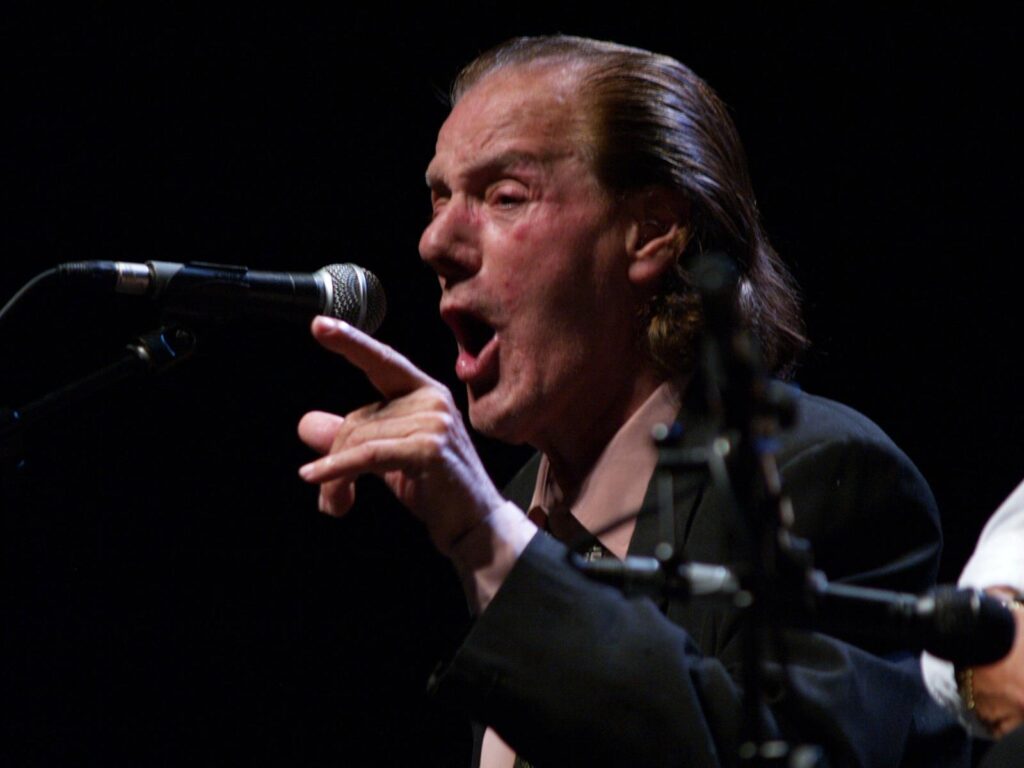
Chano Lobato, a standard-bearer of the cante por Alegrías of Cádiz.
Characteristics of the baile por alegrías
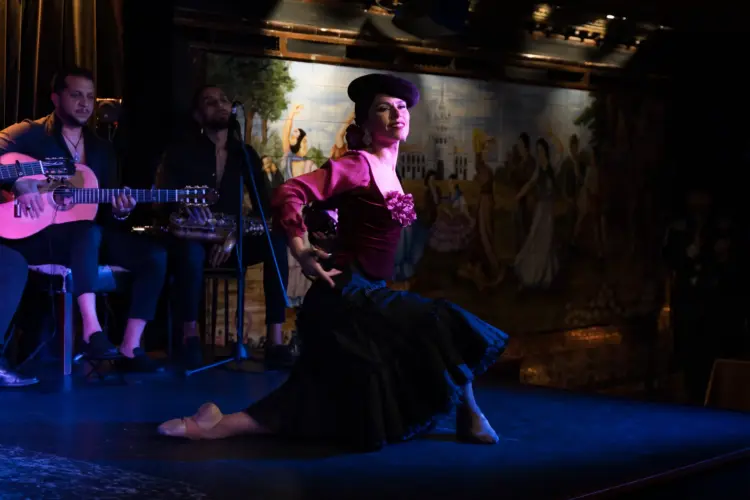
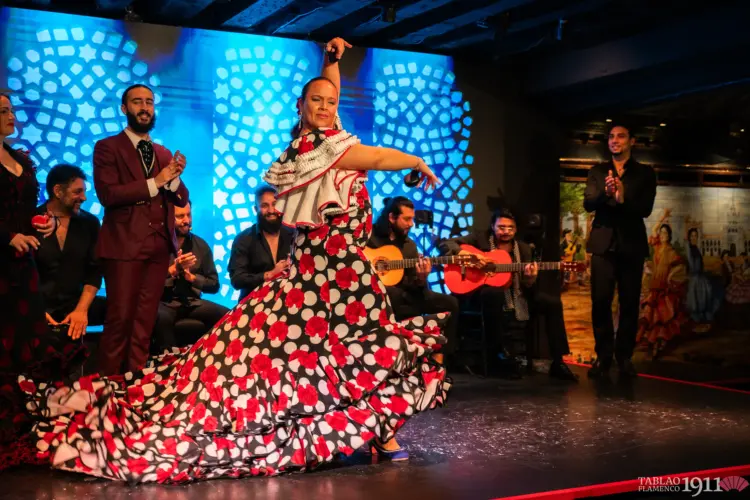
The characteristics of the alegrías in flamenco dance make it a true trial by fire on stage. Moving fast is not enough; you need “ángel” and authority. It is the dance par excellence for showing off the bata de cola and the mantón de Manila, two heavy and highly complex elements that the bailaora must handle with the skill and swagger of a bullfighter before his cape.
The compás of the alegrías: rhythm and structure
If we examine its metric skeleton, the compás of alegrías is identical to that of the great 12-beat palos, but performed at a far faster and more demanding tempo.
Its dance follows a rigorous architecture. It begins with the salida, followed by the paseos and desplantes. Then comes the most critical and beautiful moment of the performance: the silencio. Here the guitar shifts drastically to a minor key, the rhythm stops and the dance becomes pure feeling. Finally, after the display of footwork technique in the escobilla, the dance erupts and is usually finished off at a dizzying pace with bulerías de Cádiz.
Differences from other flamenco palos
To understand its weight in flamenco, the best way is to compare it with the mother of all cantes: the soleá flamenca.
Both palos share exactly the same 12-beat metre. Yet they are two sides of a coin. While the soleá is slow, dark, solemn and played in a minor key, the alegría is fast, luminous, extroverted and performed in a major key. The soleá looks towards the earth; the alegría looks towards the ocean.
What the alegrías convey on stage
This palo is a gust of pure air bursting into a closed room. A well-danced alegría must convey the dazzling light of the bay, the salt of the sea and the indomitable spirit of a people who know how to laugh even at misfortune.
To appreciate the flash of a bata de cola, the precision of an off-beat zapateado and the echo of a good “tirititrán”, your phone screen will never be enough. We invite you to feel the vibration of the wood and live the rawest, most authentic experience in Madrid at the former flamenco tablao Villa Rosa, where the truth of this art comes to life every night just metres from you.
Featured posts
Flamenco shows

From 13 to 18 October
José Maya on stage at Tablao Flamenco 1911
This week, one of the most powerful names in contemporary flamenco shines once again on our stage: José Maya.

12 October
Juan Carlos Avecilla: the force of Cádiz in the Cathedral of Flamenco
Only the greats set foot on the oldest stage in the world. The force of Cádiz in Juan Carlos Avecilla, just a couple of metres from you.
From 12 to 18 October
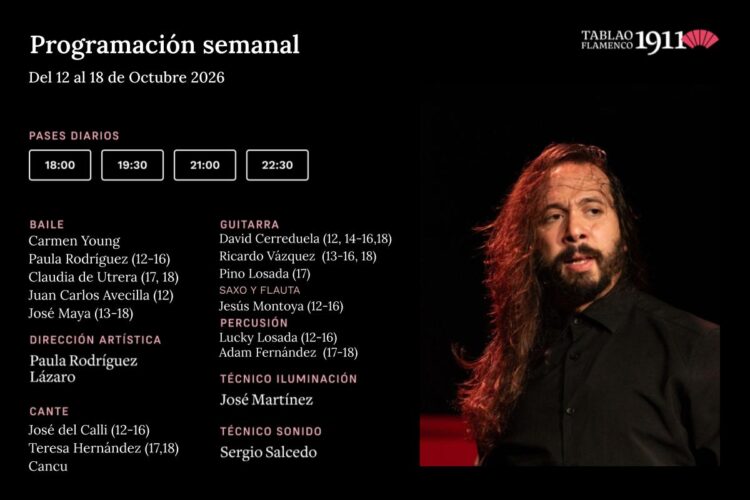
Flamenco Madrid Daily Show
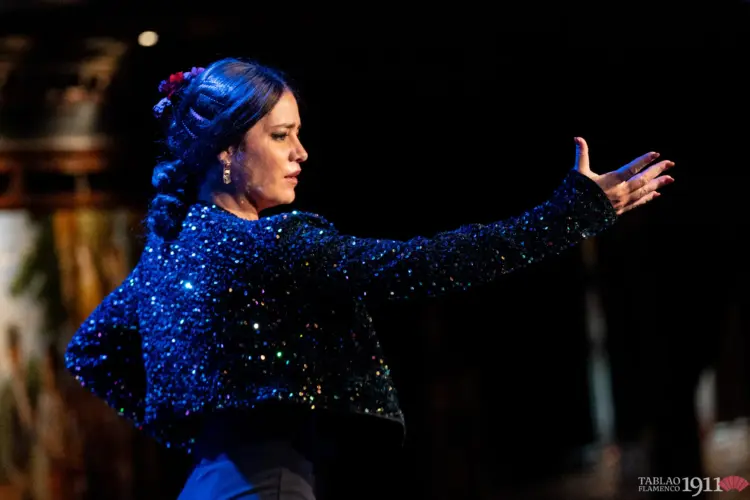
This week, our flamenco ensemble renews itself to offer you an experience full of nuances and overflowing talent.
From 12 to 18 October
Carmen Young: elegance turned into dance at Tablao 1911
She crossed an ocean to learn to dance flamenco. Today she dances it with an elegance that can't be taught.

From 12 to 16 October
Paula Rodríguez returns to 1911
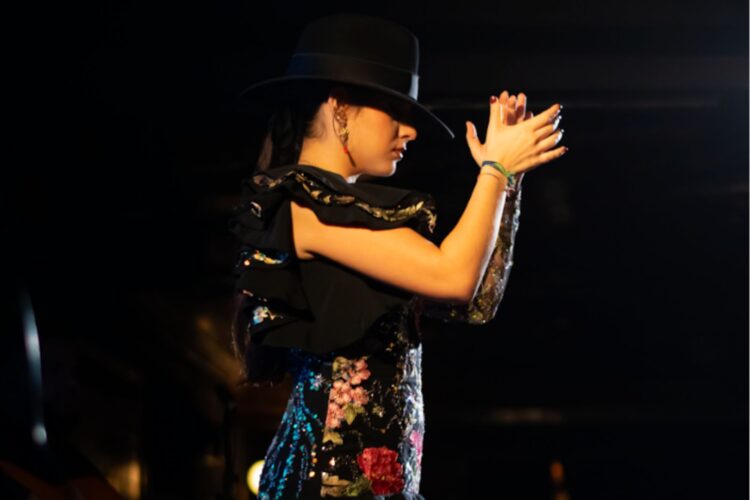
Paula Rodríguez, pure passion, strength, and elegance!
From 17 to 18 October
The Old Soul of a New Talent: Claudia de Utrera
We invite you to discover the strength and maturity of Claudia de Utrera, a dancer who proves that art