The bata de cola in flamenco: history, technique, and symbolism
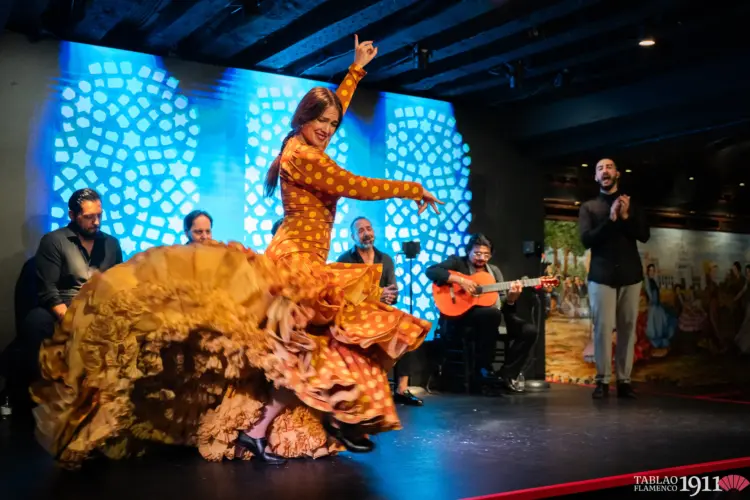
The first time someone sees a real dance with a bata de cola, they usually cannot accurately describe what just happened. They know they have seen something different. That the dancer hasn’t just moved — she has conversed with the fabric, and the fabric has answered her. That is not learned in an afternoon.
What is the flamenco bata de cola?
It is a flamenco dress with a back extension — the train (cola) — that can measure between 150 and 175 centimeters from the waist. Some dancers have used even longer ones. Carmen Amaya even managed to move three meters of fabric. It is not an accessory or a decorative element. It is one of the most demanding artistic tools in flamenco, comparable in technical difficulty to playing the guitar or keeping the rhythm with precision.What distinguishes it from other fundamental elements of flamenco is that it cannot be faked. With the guitar, a mistake can be hidden in the next chord. With the bata de cola, a bad move remains on stage for seconds, in plain sight of everyone.
The origin of the bata de cola
It comes from the XIX century, from the trailing dresses that Andalusian women wore to social events. The dancers of the early cafés cantantes began bringing them to the stage and developing techniques to handle them while dancing. Granada appears in most accounts as the city where the bata de cola as we know it was born, although the debate over its exact origin remains open among researchers.The early ones weighed up to 25 kilos — starched fabrics, organdy, bobbin lace. Matilde Coral, who wrote the most important treatise on this garment, recounts that when she started dancing with it, the physical effort was comparable to carrying a small person. Today, materials have changed — poplin, silk knit, organza — and the weight is around 10 kilos. The technical difficulty has not decreased.
The bata de cola as an artistic tool
There are dancers who wear the bata de cola. And there are dancers who dance it. The difference is enormous, and the audience perceives it even if they don’t know how to name it.
Technique and difficulty of dancing with a bata de cola
During turns, one leg is in the air and the weight of the tail shifts the center of gravity. If the impulse is too strong, the tail opens up and shows its underside — in traditional flamenco, that is a mistake. If it is too weak, the fabric falls dead. The dancer cannot look at it while dancing. She has to feel it.That takes years. Not months — years. The balance, strength, and control have to be so automatic that they leave mental space for the dance itself, for the singing, for the rhythm.
Weight and movement as language
A sudden stop creates a wave of fabric that runs through the tail from top to bottom. A slow turn generates a spiral that continues spinning when the body has already stopped. A seating position unfurls the ruffles as if the dancer had blossomed.The bata de cola does not follow the body — it converses with it. And as in any dialogue, the interesting part lies in the silences, in what is not said, in the moment when the tail goes on its own and the dancer lets it go.
The great dancers and the bata de cola
Matilde Coral wrote her treatise precisely because she saw that the technique was being lost. Blanca del Rey and Merche Esmeralda kept it alive when contemporary flamenco was beginning to do without it. Carmen Amaya took it to an extreme of energy and speed that still seems impossible today in the surviving videos.More recently, Úrsula López has shown that the bata de cola can coexist with a contemporary dance language without losing an ounce of its historical weight.
The bata de cola today: a living tradition on stage
It doesn’t appear in all flamenco shows in Madrid. There are palos and styles where it has no place, and there are dancers who have decided not to work with it. It is a legitimate choice. But when it appears on stage, especially in a small and intimate space like a tablao, the effect is hard to prepare for.There is no screen, there are no lighting effects, there is no cheating. Just one woman, three meters of fabric, and the rhythm. If it works, it is one of the most beautiful things anyone visiting Madrid can see. If it doesn’t work, it is also noticeable.At Tablao Flamenco 1911, for over a century we have watched dancers who have mastered it pass across this stage. We know its worth.
Buy tickets for the most authentic flamenco show in Madrid
Buy tickets
Featured posts
Flamenco shows

From June 8 to 14
El Yiyo: The New Legend of Flamenco
The stage welcomes a flamenco phenomenon: El Yiyo.
From June 8 to 14
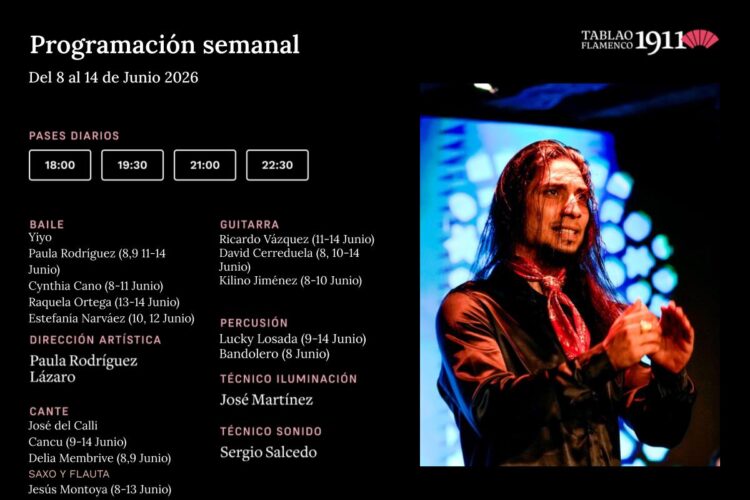
Flamenco Madrid Daily Show
This week, our flamenco ensemble renews itself to offer you an experience full of nuances and overflowing talent.
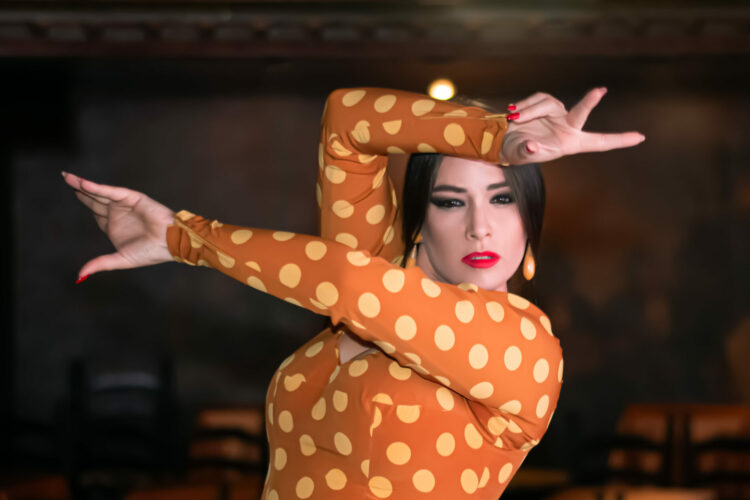
June 8 and 9
Paula Rodríguez returns to 1911
Paula Rodríguez, pure passion, strength, and elegance!
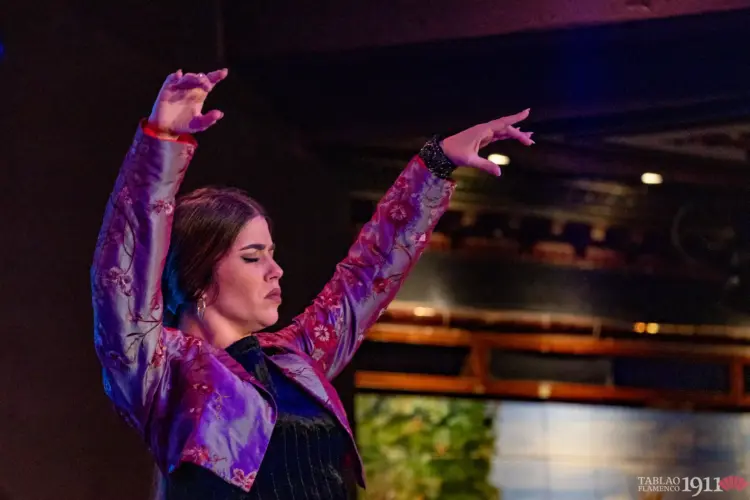
From June 8 to 11
Cynthia Cano: Flamenco Made Woman
This week, flamenco dance has a name of its own at Tablao 1911.
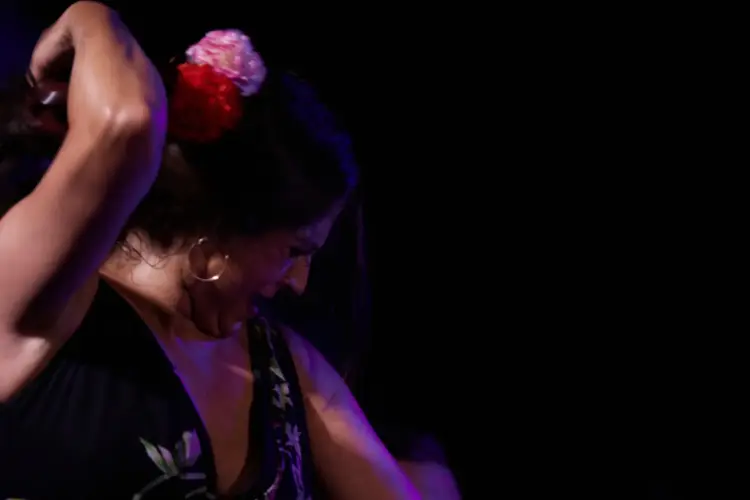
13 y 14 de Junio
The mastery of Raquela Ortega at Tablao Flamenco 1911!
Come and enjoy the strength and elegance of Raquel Ortega!