Tablao Flamenco 1911 in cinema: seven decades of history on Madrid’s most photographed stage
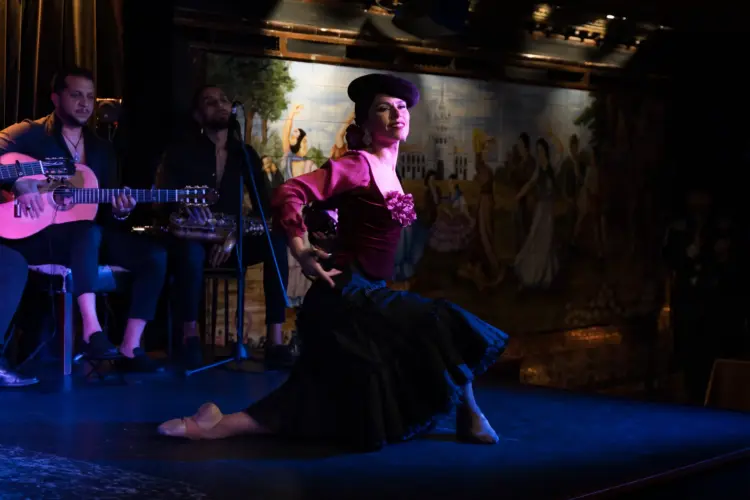
There are spaces that film directors recognise instantly. No need to search long. You walk in, look at the Arabic-inspired arches, the tiles with scenes from all over Spain, the dark wood of the stage — and you already know that cannot be built in a studio. That only exists in one place. The Tablao Flamenco 1911, at Plaza de Santa Ana number 15, has been exactly that for over a century: a place the camera cannot invent.
A space that captivates film directors
The decoration of the 1911 is unique in the world. The tile panels covering the facade and interior were created in the early twentieth century by the finest ceramicists in Madrid — Antonio Ruiz de Luna and Julián Santacruz. They depict scenes from Spanish cities, bullfighting moments and flamenco images that have been preserved intact ever since.
That detail changes everything. A film director who needs to set a scene in authentic Madrid, in real flamenco or in the Spanish night of any era has in the 1911 a set that no art department can replicate. It is not a stage that imitates history — it is history itself.
And the numbers confirm it: seven different productions in three decades, with some of the most important directors in Spanish cinema choosing this space again and again.
Films and series shot at Tablao Flamenco 1911
High Heels — Pedro Almodóvar (1991)
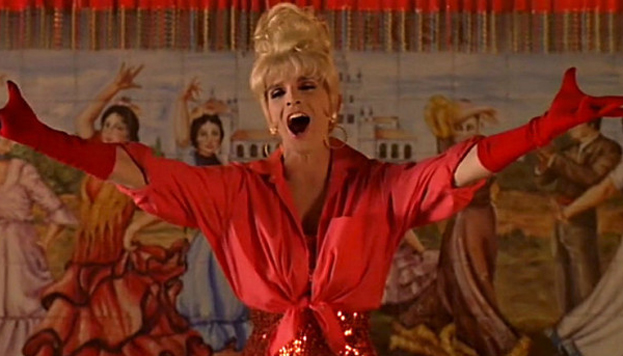
It is the scene everyone remembers. Miguel Bosé, in drag as his character, removes his glove in the purest Gilda style before the gaze of Victoria Abril and Marisa Paredes. Almodóvar chose the 1911 — then known as Villa Rosa — for one of the most iconic sequences of his career. The tile murals in the background are unmistakable. The scene made the venue part of the imagery of Spanish cinema in the 90s.
Why Do They Call It Love When They Mean Sex? — Manuel Gómez Pereira (1993)
The same year as La Lola, Manuel Gómez Pereira shot another scene here from his comedy starring Verónica Forqué and Jorge Sanz. A kiss between the two protagonists with the tablao arches in the background. Subtle but present — Villa Rosa appears in two different films in the same year, which says a great deal about the appeal of the space for the cinema of that era.
La Lola se va a los puertos (1993)
That same year, Rocío Jurado and Paco Rabal inhabited the tablao in the remake of this classic. The combination of two legends of Spanish entertainment in one of the most historic flamenco spaces in Madrid produced one of the most memorable scenes of that production.
The Girl of Your Dreams — Fernando Trueba (1998)
Fernando Trueba chose the 1911 to set one of the scenes of this comedy with Penélope Cruz, Antonio Resines, Rosa María Sardá, Javier Cámara, Santiago Segura and Mandy Patinkin. The space fitted perfectly with the atmosphere of the film — the Madrid of the 1940s, with its mix of glamour and popular authenticity. Trueba would return to the tablao years later.
Spanish Affair 2 — Emilio Martínez-Lázaro (2015)
The highest-grossing Spanish film in history up to that point also came through the 1911. The duo of Karra Elejalde and Dani Rovira starred here in one of the most hilarious scenes of the film. The tablao provided exactly what the sequence needed: a recognisable space, loaded with Andalusian iconography, that the director used with humour and precision.
The Queen of Spain — Fernando Trueba (2016)
Trueba came back. Eighteen years after The Girl of Your Dreams, the same director chose the same space for the sequel, this time with Penélope Cruz again as protagonist alongside a cast that included Antonio Resines, Javier Cámara, Ana Belén and Santiago Segura. Trueba’s loyalty to the 1911 is no coincidence — when a director returns twice to the same location, it is because that location does something no other can.
Arde Madrid — Paco León (2018)
The Movistar+ series about the life of Ava Gardner in the Madrid of the 1960s could not ignore the 1911. The tablao was one of the real locations of the series — and also the place where Paco León chose to present it publicly. That the director presented his project here was no coincidence: Villa Rosa was part of Ava Gardner’s nights in Madrid, and the series knew it.
Why directors choose the 1911
The short answer is that there is no other place like it. But there is more.
Authenticity is irreproducible. The tiles, the arches, the wood of the stage — everything is over a hundred years old. No art department can manufacture that patina. The camera notices it and so does the viewer, even if they cannot quite say why.
The space speaks for itself. A director does not need to load a scene with symbols when the set already carries them. The 1911 communicates Spain, flamenco, history, Madrid nightlife — without anyone having to explain it.
The scale is perfect. It is not a monumental or intimidating space. It is intimate, with exactly the right proportions for the camera to capture characters in direct relation to their surroundings. That balance between space and figure is hard to find.
A historic stage that is still alive
What makes the 1911 unique among all the spaces that have appeared in Spanish cinema is that it is not a museum. It is still operating. Every night, the same stage where Almodóvar gave directions to Miguel Bosé hosts live flamenco artists, just a few metres from the audience.
That continuity between history and the present is what makes a visit to the 1911 different from watching a film or visiting a monument. Here history is not in a display case — it is happening right now.
If you want to discover more stories and anecdotes about the space, here are the secrets of the tablao. And if you want to experience history in person, here is the live flamenco show.
Featured posts
Flamenco shows

From 13 to 18 October
José Maya on stage at Tablao Flamenco 1911
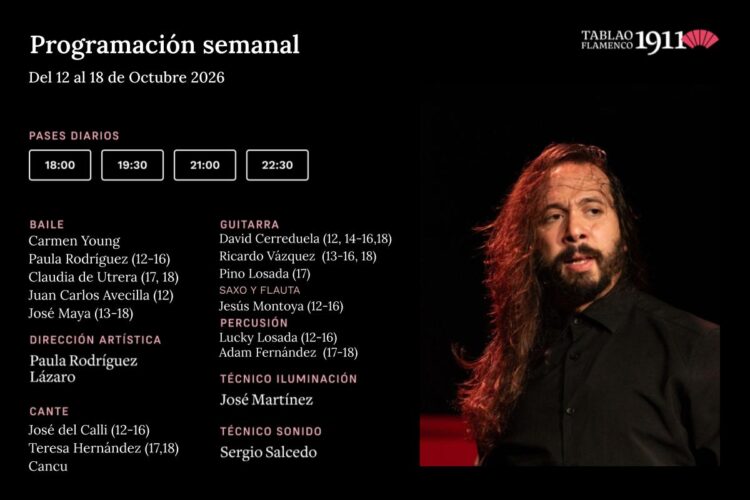
This week, one of the most powerful names in contemporary flamenco shines once again on our stage: José Maya.
From 12 to 18 October
Flamenco Madrid Daily Show
This week, our flamenco ensemble renews itself to offer you an experience full of nuances and overflowing talent.
From 12 to 18 October
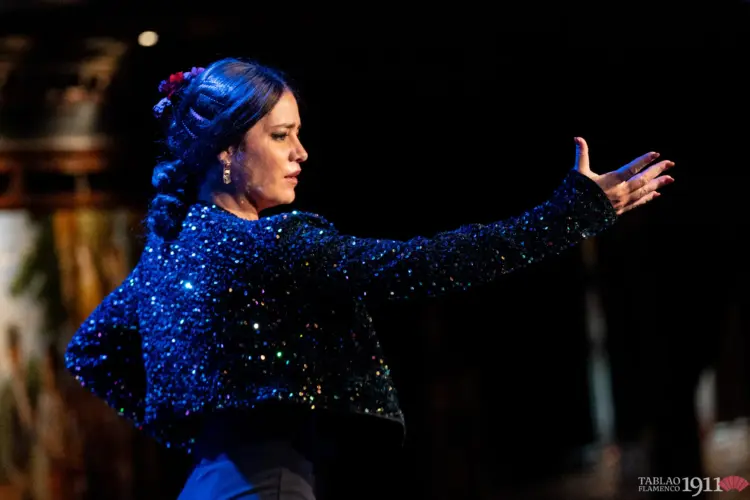
Carmen Young: elegance turned into dance at Tablao 1911
She crossed an ocean to learn to dance flamenco. Today she dances it with an elegance that can't be taught.
From 12 to 16 October
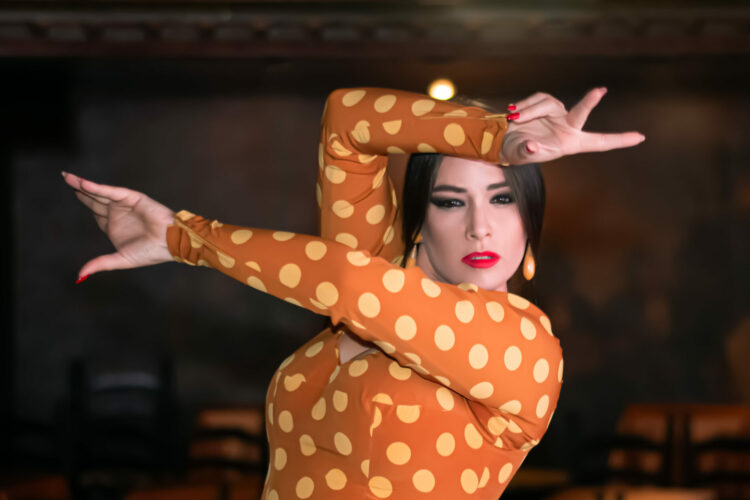
Paula Rodríguez returns to 1911
Paula Rodríguez, pure passion, strength, and elegance!
From 17 to 18 October
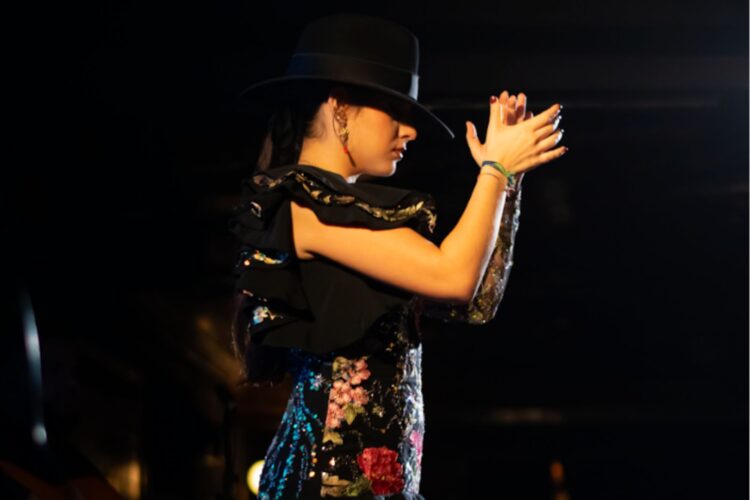
The Old Soul of a New Talent: Claudia de Utrera
We invite you to discover the strength and maturity of Claudia de Utrera, a dancer who proves that art