Flamenco taconeo: technique, rhythm and meaning of the zapateado
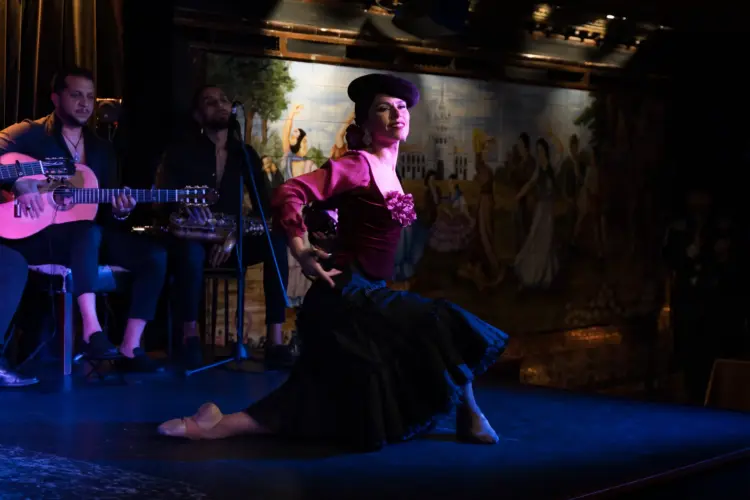
Close your eyes in a tablao. Before you see anything, you’ve already heard it. A dry strike on the wood. Then another. Then ten at once, so fast the ear can’t tell them apart. That is flamenco footwork. Not decoration. Not accompaniment. The centre of everything.
What flamenco footwork is
The bailaor’s feet are an instrument. Just like the guitar, just like the palmas. The difference is that this instrument weighs seventy kilos and breathes.
Flamenco zapateado is the technique by which the feet build rhythm on the wood. They don’t move about — they speak. And they do it with footwear designed for the job: boots and shoes with nails in the toe and the heel, filed by hand so the sound comes out clean. Dry. With no dirty echo.
Without those nails, the strike dies away. With them, every impact has a name of its own.
Origin of footwork in flamenco
Eighteenth-century flamenco didn’t have this. It was cante. It was guitar. It was palmas. Dance existed, but nobody considered it the most important part.
That changed in the nineteenth century. The Cafés Cantantes put flamenco on public stages, with a paying audience and artists competing. Where there is competition, there is innovation. Zapateado stopped being ornament and became argument. It absorbed the African rhythm that had arrived through Cádiz, the gypsy temperament, the patterns of Andalusian folk dances. And out of all that came something that hadn’t existed before.
Footwork technique: planta, tacón and punta
Three strikes. Only three. But in the possible combinations between them lies all the complexity in the world.
The planta — the whole base of the foot against the floor. Deep. Full. The strike that anchors the rhythm when everything else is flying.
The tacón — the back of the shoe. Deeper still. An echo that sinks into the wood and takes its time coming out. It gives weight to everything that follows.
The punta — the front tip. Sharp, instant, with no reverberation. It’s what allows the fastest rolls, the off-beats nobody sees coming.
A bailaor who masters all three can make music with their feet. One who doesn’t just makes noise.
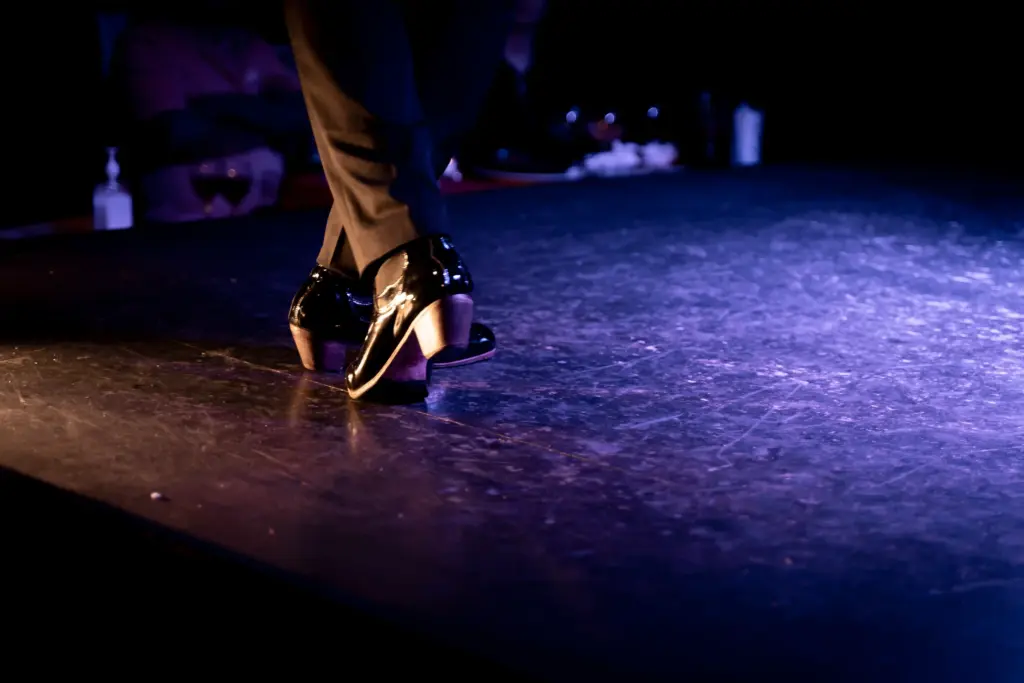
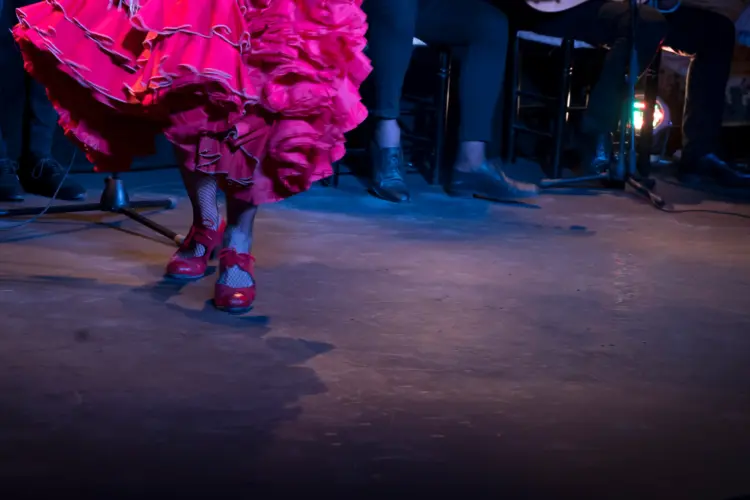
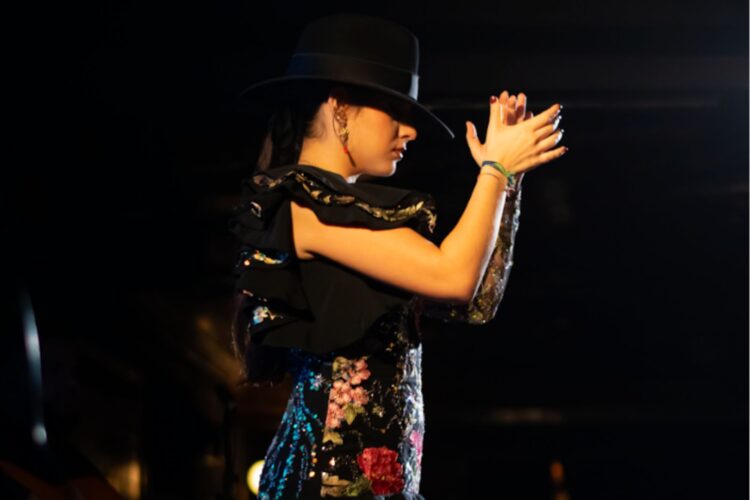
Flamenco footwork shoes on the stage of Tablao Flamenco 1911 Madrid
Flamenco zapateado as a percussive language
Footwork never goes alone. Never. It’s a conversation with the guitar and the cante — sometimes agreement, sometimes provocation. The bailaor listens, answers, anticipates. And sometimes runs ahead to see whether the guitarist follows.
For that conversation to work, the flamenco compás and rhythm has to be in the body. Not in the head — in the body. When it’s in the head, you can tell. When it’s in the body, the whole tablao feels it.
Differences between male and female footwork
Fifty years ago, the question had an easy answer. The man struck hard and dry. The woman did everything else — hands, torso, gaze.
Today the question hardly makes sense. Today’s bailaoras strike with a speed and power that owe nothing to anyone. And bailaores work the upper body with a precision nobody used to expect of them. What sets one artist apart from another isn’t gender. It’s the stamp. Their own way of doing the very thing everyone else does.
Footwork in the live flamenco show
There are things video doesn’t convey. Footwork is one of them.
Live, three metres away, the sound doesn’t reach you through the ears alone. It comes up through the floor. Through the chest. The boards vibrate. The air moves. It’s a physical experience before a musical one — and no camera records that.
At Tablao Flamenco 1911 the capacity is small on purpose. Not out of limitation — out of choice. We want the audience close. Really close. Close enough that the footwork isn’t a show but something happening in the very room where you’re sitting.
If you’d like to see for yourself, here are our flamenco shows in the centre of Madrid.
Featured posts
Flamenco shows

From 13 to 18 October
José Maya on stage at Tablao Flamenco 1911
This week, one of the most powerful names in contemporary flamenco shines once again on our stage: José Maya.
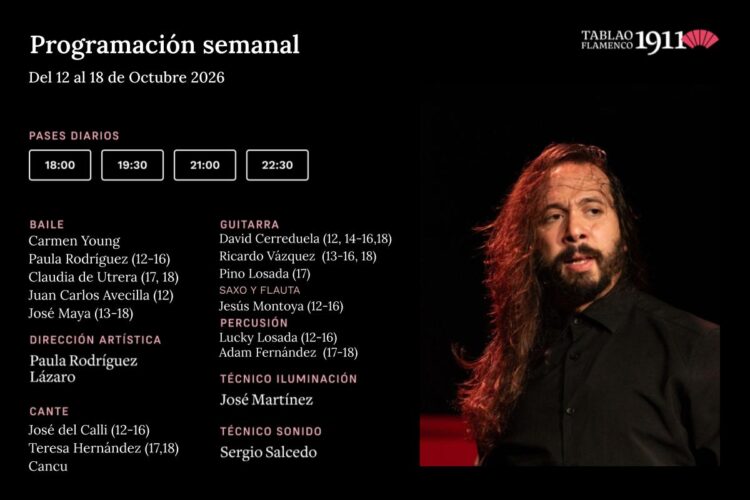
From 12 to 18 October
Flamenco Madrid Daily Show
This week, our flamenco ensemble renews itself to offer you an experience full of nuances and overflowing talent.
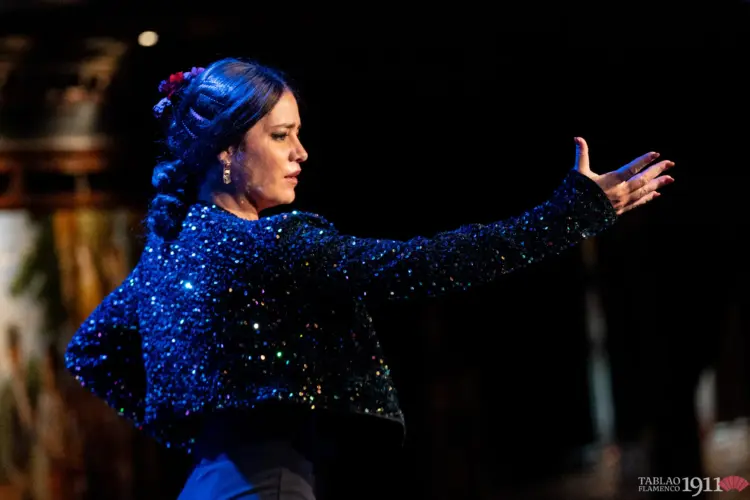
From 12 to 18 October
Carmen Young: elegance turned into dance at Tablao 1911
She crossed an ocean to learn to dance flamenco. Today she dances it with an elegance that can't be taught.
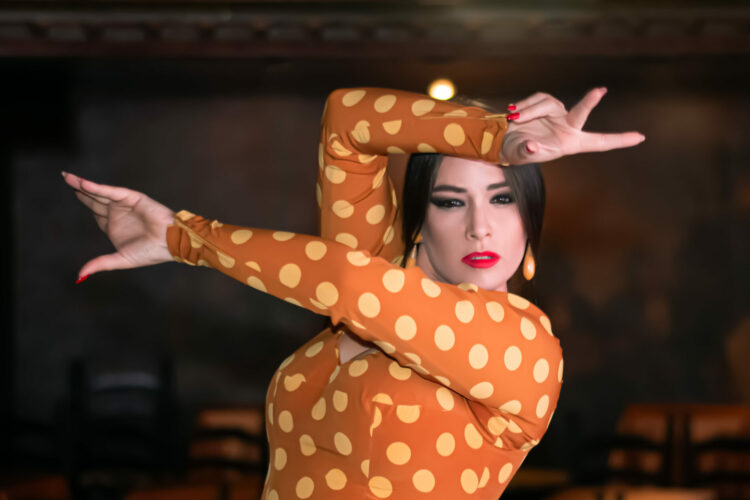
From 12 to 16 October
Paula Rodríguez returns to 1911
Paula Rodríguez, pure passion, strength, and elegance!
From 17 to 18 October
The Old Soul of a New Talent: Claudia de Utrera
We invite you to discover the strength and maturity of Claudia de Utrera, a dancer who proves that art