Soleá
-
What is Soleá?
The Soleá is one of the most famous and respected styles by artists and aficionados. It is considered to be the palo (style) that has structured the musical aesthetics of the flamenco genre itself.
-
Why is it used?
When we interpret this flamenco style either dancing, singing or playing, we seek to free ourselves from the memories that generate a pain or an internal conflict. It is a serious style, which seeks the catharsis of the artist and the public.
-
Thematic
The Soleá is a style whose name reflects the feeling of loneliness and introspection that it imprints. The lyrics used in this cante usually refer to a very specific type of grief. A grief caused by loss -not necessarily referring to death-.
-
Costumes
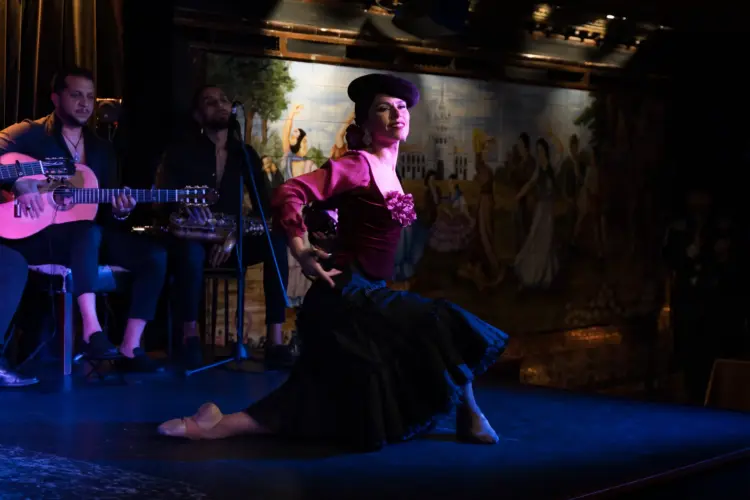
The costumes used are dark and sober, helping to introduce us into the atmosphere generated by the soleá. In general, we will find few accessories in this dance. However, we find artists such as La Chana who danced with castanets and bata de cola, or one of our artists Vanesa Coloma, who usually wears a bata de cola in this style.
-
How is it interpreted?
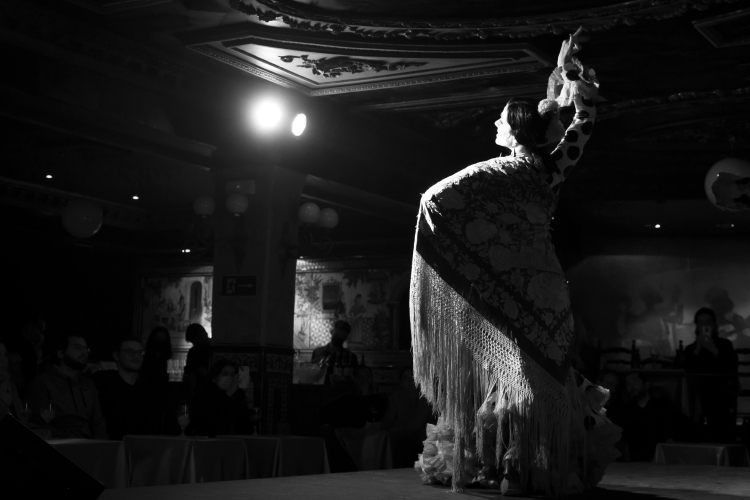
Like most flamenco dances, the soleá is divided into two parts. The first part is the main style that we dance, -in this case soleá- and a second part that serves to end the dance, which, in this case, are the bulerías. We are going to witness a very solemn and stopped dance in which the feeling that instills the soleá is going to be present in every gesture and movement of the performer.
-
A little bit of history
The soleá is one of the most characteristic dances of the flamenco genre since it gathers all the essential elements of the dance aesthetics. However, it is not the oldest dance of this genre. The latest theories argue that these elements of the soleá were taken from another, older dance; the alegrías. As a palo (style), we can justify its existence as a process of “gitanization” of popular tunes during the early 19th century. This process became a fashion at the time, laying the aesthetic-musical foundations of the melodies of this and other styles such as the caña or the seguiyiras. On the other hand, the dance has its antecedents in the “boleras de jaleo” that at the beginning of the 19th century presented steps and elements that we can associate to the previous stage of flamenco. From these “jaleos” will derive the dance we know today, which, historically speaking, is recent. It was standardized by the dancer Rosario ‘La Mejorana’ at the end of the 19th century.
Enjoy!
Featured posts
Flamenco shows
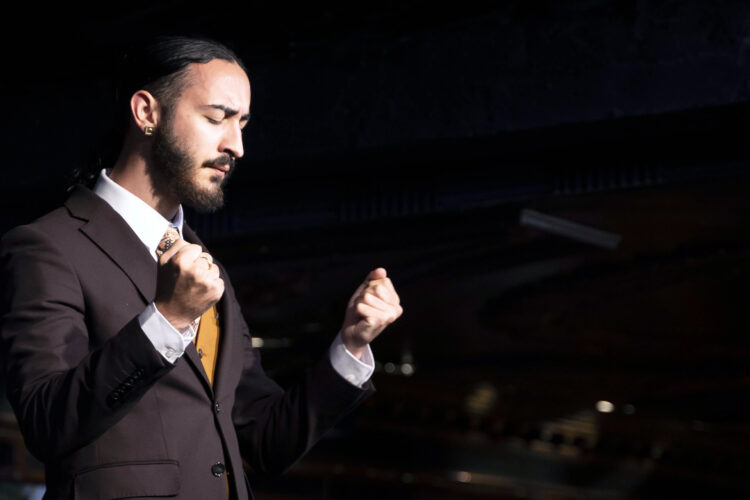
From 19 to 25 October
José Escarpín and his Guinness World Record at Tablao Flamenco 1911
The Guinness World Record of flamenco arrives at the oldest flamenco tablao in the world: Tablao Flamenco 1911.
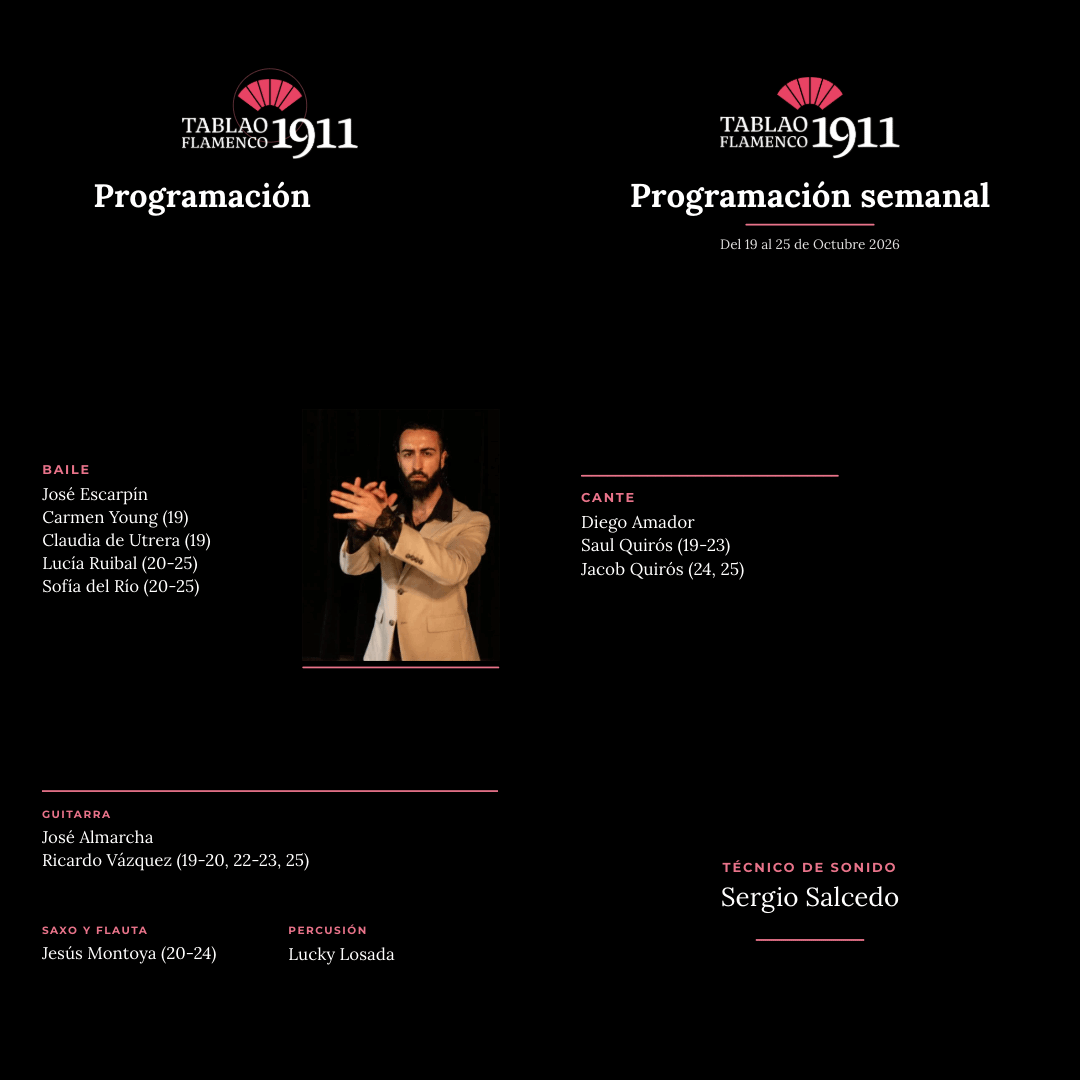
From 19 to 25 October
Flamenco Madrid Daily Show
This week, our flamenco ensemble renews itself to offer you an experience full of nuances and overflowing talent.
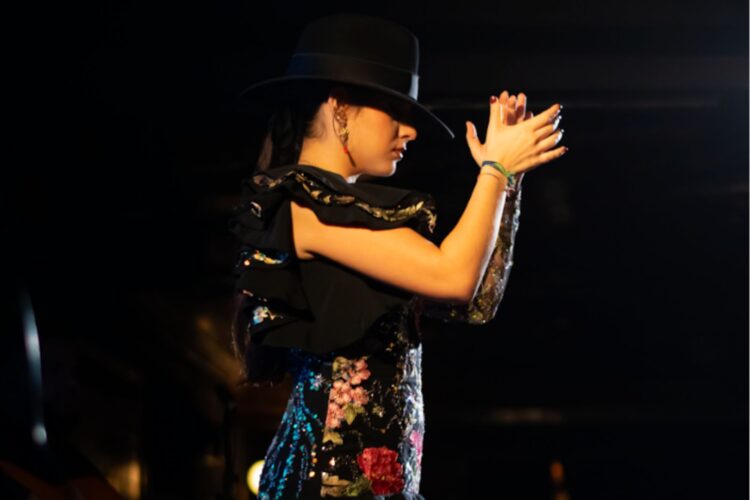
19 October
The Old Soul of a New Talent: Claudia de Utrera
We invite you to discover the strength and maturity of Claudia de Utrera, a dancer who proves that art
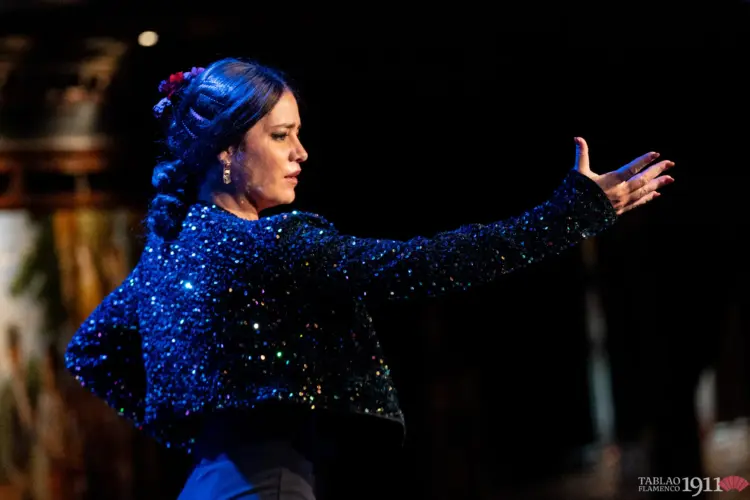
19 October
Carmen Young: elegance turned into dance at Tablao 1911
She crossed an ocean to learn to dance flamenco. Today she dances it with an elegance that can't be taught.