Manolo Caracol: Genius and Icon of Gitano Singing
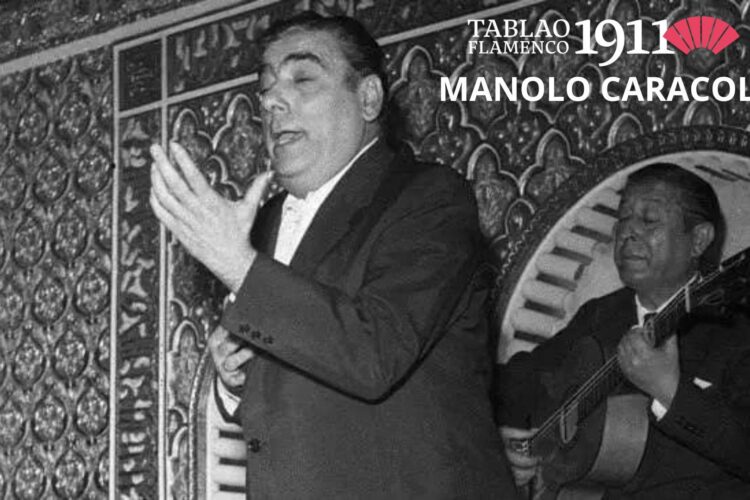
Speaking of Manolo Caracol means speaking of one of the most powerful and brilliant personalities flamenco singing (cante flamenco) has ever produced.
Manuel Ortega Juárez (Seville, 1909 – Madrid, 1973) was not just any cantaor; he was a whirlwind of art, descendant of a long Gitano lineage of artists (great-nephew of Enrique El Mellizo) and owner of a voice and presence that were absolutely unmistakable.
A key figure of the Ópera Flamenca era but also deeply versed in the purest styles, Caracol was both loved and debated — but no one could deny he was a genius and unique figure.
On the Tablao Flamenco 1911 blog, we explore the legend of this monumental cantaor.
The Bloodline Calls: Gitano Heritage and a Blazing Start
Carrying the Ortega name meant rhythm was already in his veins. Manolo grew up in Seville’s Alameda de Hércules, hearing flamenco from the cradle. Art was bound to burst out. And it did quickly: at just 13, he won the prestigious Concurso de Cante Jondo in Granada in 1922! (Yes, the very one Lorca and Falla promoted.) A dazzling beginning for a child whose voice sounded old, like a haunting Gypsy echo.
The Voice and Style of Caracol: Raw Emotion and Personality
What did Caracol sound like? Totally unique. His voice may not have been the most powerful or cleanest, but it had something even more vital: pellizco, rawness, and a commanding personality. He sang with brutal, almost theatrical expressiveness, pushing each tercio to its limit.
He mastered many flamenco forms, but truly shone in fandangos (creating his own unmistakable personal style), seguiriyas, soleares, and of course zambras, a genre he revitalized and made wildly popular — often performing in artistic duo with the great Lola Flores.
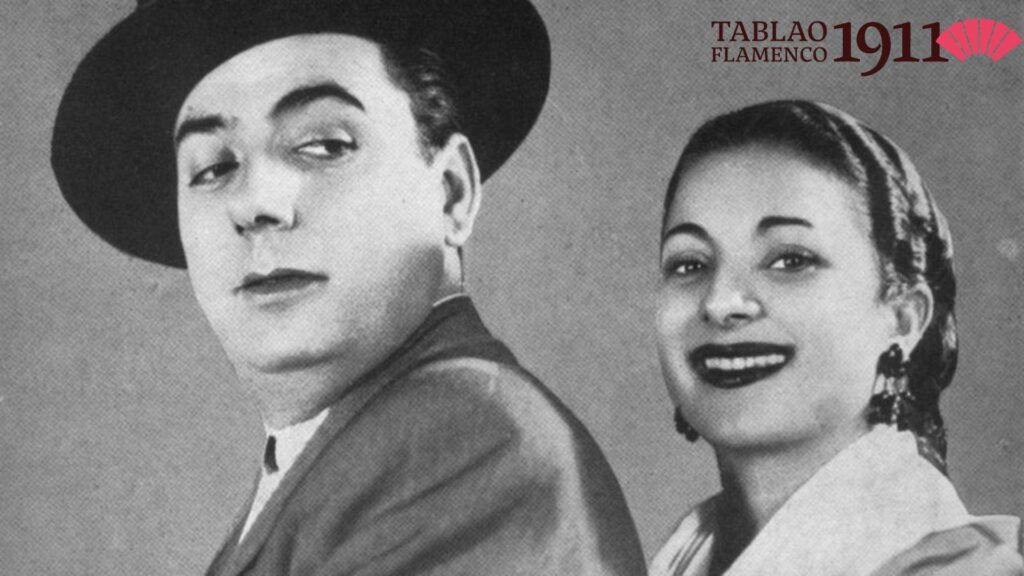
The “Ópera Flamenca” and Mass Appeal
Caracol was one of the great stars of the Ópera Flamenca era. His shows, often alongside Lola Flores, packed theaters and bullrings. He fused the purest flamenco with songs, orchestrated zambras… He was a showman, a total artist who connected with the audience like few others.
This earned him criticism from flamenco purists, who accused him of “watering down” flamenco. But Caracol always defended his approach, saying he brought flamenco closer to the people and never gave up his jondo roots when he had to sing pa’ los cabales.
Los Canasteros: A Tablao of His Own
Perhaps as a response to critics, or simply to fulfill a personal need for intimacy, Manolo Caracol made one of his dreams come true in 1963: opening his own tablao in Madrid, Los Canasteros. It quickly became a temple of flamenco, where Caracol programmed top-tier artists (many of them young talents he himself supported) and sang whenever he felt the urge, giving rise to legendary nights.
Los Canasteros became a landmark on the Madrid flamenco scene for years — a place of elite flamenco, very much in the spirit we now carry forward at Tablao Flamenco 1911.
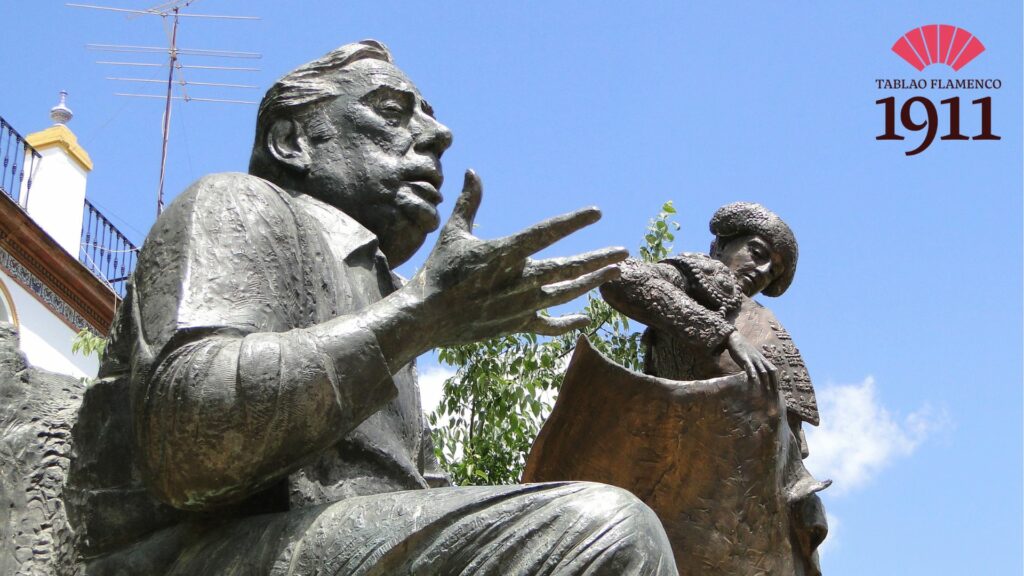
An Unforgettable Legacy: The Echo of Caracol
Manolo Caracol died in 1973 in a tragic car accident, but his echo still resonates. His delivery, his overwhelming style, his ability to move an audience… all are unerasable parts of flamenco’s singing tradition.
To listen to Caracol is to peer into an abyss of genius — a complex and unrepeatable artist who lived for flamenco and through flamenco.
Reviving His Spirit at 1911
Even though every artist is unique, the spirit of great masters like Caracol — his total surrender to art, his pursuit of pure emotion — still inspires those who step onto our stage at Tablao Flamenco 1911.
We invite you to discover that connection, and feel how the legacy of these geniuses still breathes in today’s flamenco.
Come feel the legacy of the great masters. Book your night at Tablao Flamenco 1911.
Featured posts
Flamenco shows

From 13 to 18 October
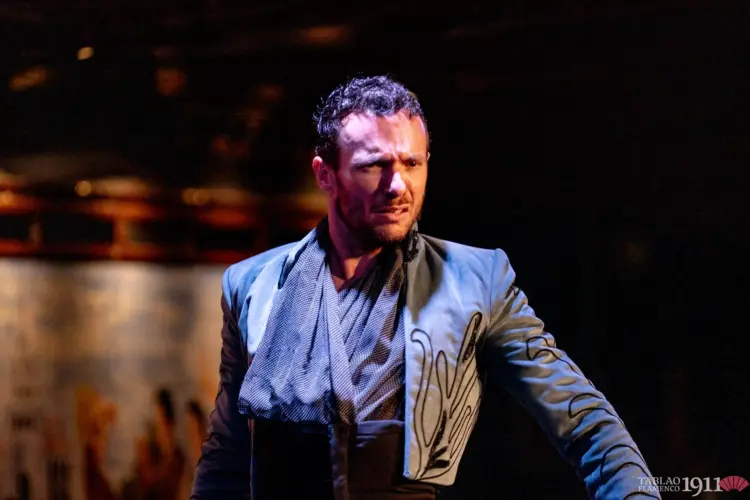
José Maya on stage at Tablao Flamenco 1911
This week, one of the most powerful names in contemporary flamenco shines once again on our stage: José Maya.
12 October
Juan Carlos Avecilla: the force of Cádiz in the Cathedral of Flamenco
Only the greats set foot on the oldest stage in the world. The force of Cádiz in Juan Carlos Avecilla, just a couple of metres from you.
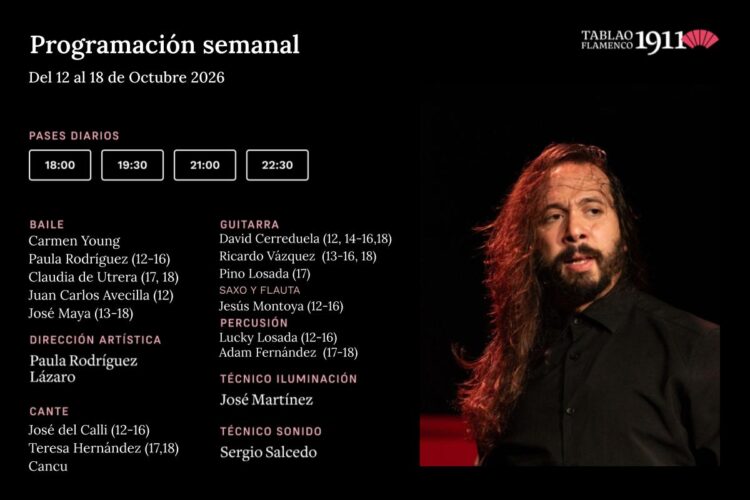
From 12 to 18 October
Flamenco Madrid Daily Show
This week, our flamenco ensemble renews itself to offer you an experience full of nuances and overflowing talent.
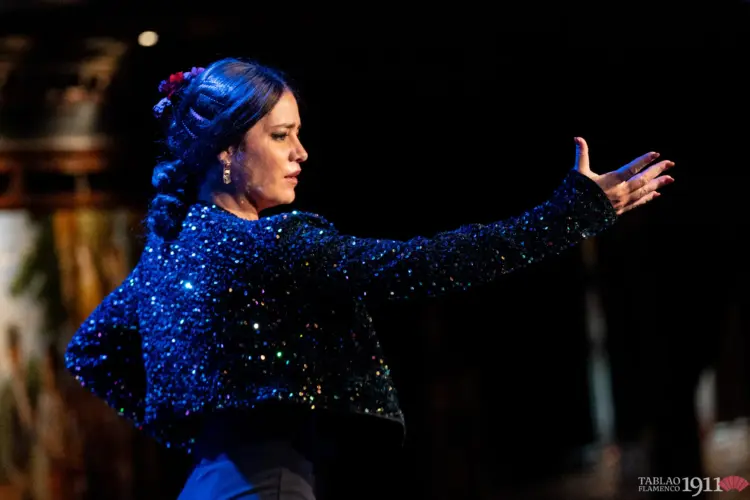
From 12 to 18 October
Carmen Young: elegance turned into dance at Tablao 1911
She crossed an ocean to learn to dance flamenco. Today she dances it with an elegance that can't be taught.
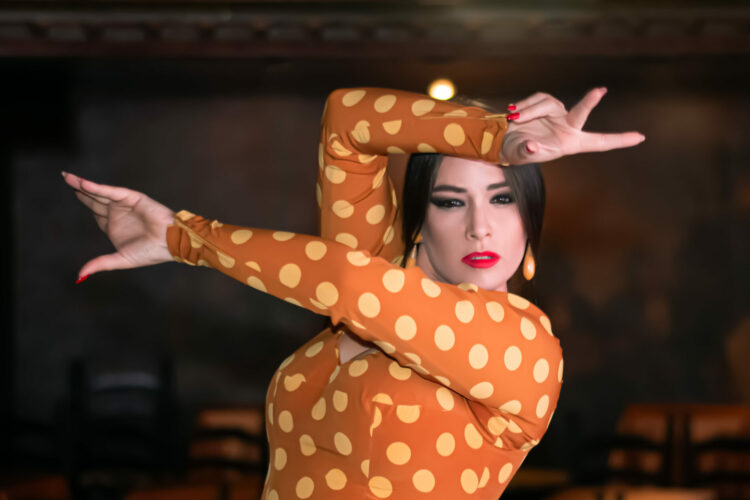
From 12 to 16 October
Paula Rodríguez returns to 1911
Paula Rodríguez, pure passion, strength, and elegance!
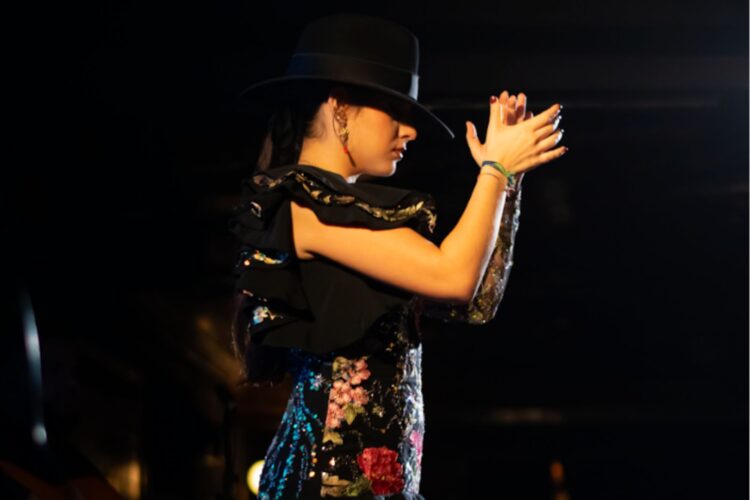
From 17 to 18 October
The Old Soul of a New Talent: Claudia de Utrera
We invite you to discover the strength and maturity of Claudia de Utrera, a dancer who proves that art