What Is Cante Jondo? A Journey to the Deepest Root of Flamenco
There is a moment in a tablao that stops everything. It’s not a footwork sequence, nor a guitar strum. It’s a silence. And from that silence, a voice emerges that doesn’t sing — it cries, it whispers, it breaks. You’re listening to Cante Jondo.
But what does it really mean? Forget the academic definitions. Cante Jondo (or canto hondo, as it’s also searched) is the primal heartbeat of pure flamenco — raw truth without embellishment. And at Tablao Flamenco 1911, we believe that to truly feel it, you first need to understand the wound it comes from.
The Origin of Cante Jondo: A Lament Turned into Art
The name is no lie: jondo comes from hondo — “deep.” Its origin isn’t academic or formal. It was born in the streets, in the soil, in persecution, love, and death.
It’s the echo of centuries of history from the Andalusian-Gypsy people — a unique blend of Byzantine laments, Jewish psalms, and Arabic melodies. It’s the raw material of traditional flamenco.
Lorca and the Poem of Cante Jondo: The Cry That Became Universal
If we speak of Cante Jondo with such reverence today, it’s largely thanks to one man: Federico García Lorca. Along with other greats like Manuel de Falla, worried that flamenco’s soul would be lost, he organized the legendary 1922 Cante Jondo Contest.
His Poem of the Cante Jondo, written the year before, was his manifesto. For Lorca, this singing was not music — it was “the tremor, the emotion, the living wound.” No better explanation exists.
The Fundamental Palos: The Three Truths of Cante Jondo
Cante Jondo expresses itself through various palos (flamenco styles). To begin recognizing it, just learn its three pillars — three ways of naming pain:
-
Siguiriya: If death had a sound, it would be a Siguiriya. It’s the most tragic flamenco style. Harsh, dry, brutal.
-
Soleá: The serene, majestic solitude. There’s pain, but also an almost philosophical acceptance. The height of elegance in lament.
-
Taranto: A cante jondo that smells of the mines. Born in the darkness of Almería, amidst fatigue and dust. A song of labor, stripped of decoration.
How Do I Know I’m Hearing Cante Jondo?
You don’t need to be an expert. Your skin will tell you. But if you want a guide, next time you’re at a flamenco tablao in Madrid, tune in and look for this:
-
The Quejío: That opening “¡Ay!”. It’s not flair — it’s a wound turned into sound.
-
The Lyrics: No choruses here. Short, sharp lines. Popular poetry in its purest form.
-
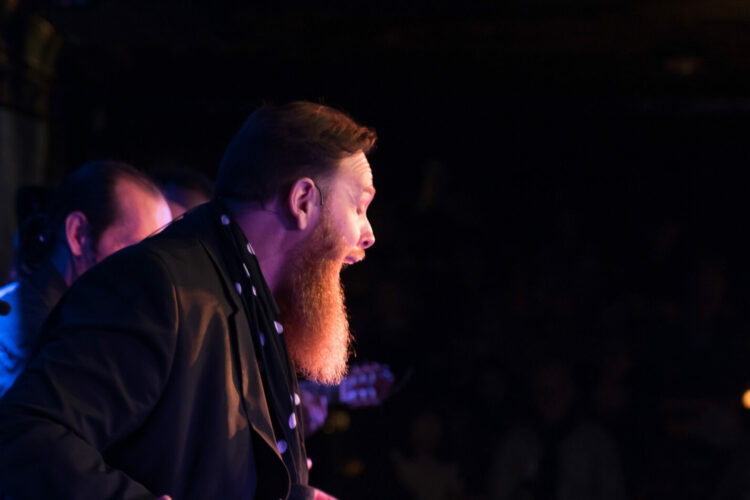
The Singer: Watch them. Still, eyes closed, fully present. Their energy flows entirely through the voice. They’re not performing — they’re conducting a ritual.
The Living Legacy: Guardians of the Song and the Perfect Stage
Masters like Manolo Caracol and Antonio Mairena were some of the great cantaores who kept this flame alive. Today, that responsibility rests with the artists who dare to face these songs night after night.
And for such a pure art form, the stage matters. It needs a sanctuary — not a set. A place that honors silence.
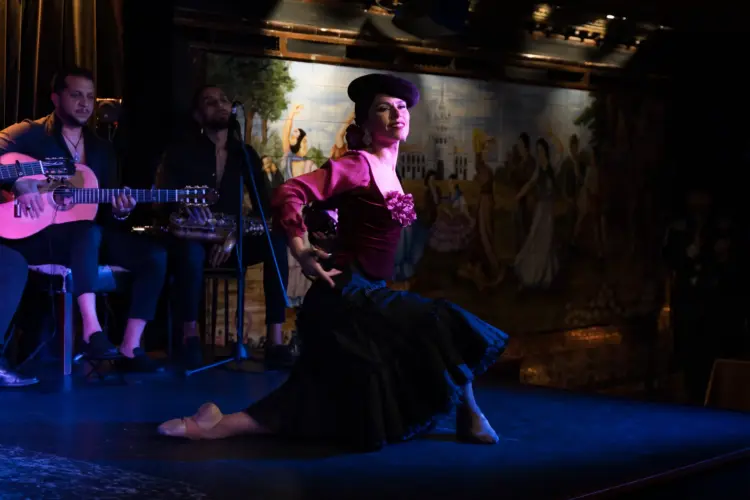
At Tablao Flamenco 1911, our hundred-year-old stage honors that tradition. Here, cante jondo isn’t part of the repertoire — it’s the heart of everything.
Come feel the truth of Cante Jondo.
We await you where history and duende still go hand in hand.
BOOK YOUR NIGHT OF PURE FLAMENCO
Featured posts
Flamenco shows

From 13 to 18 October
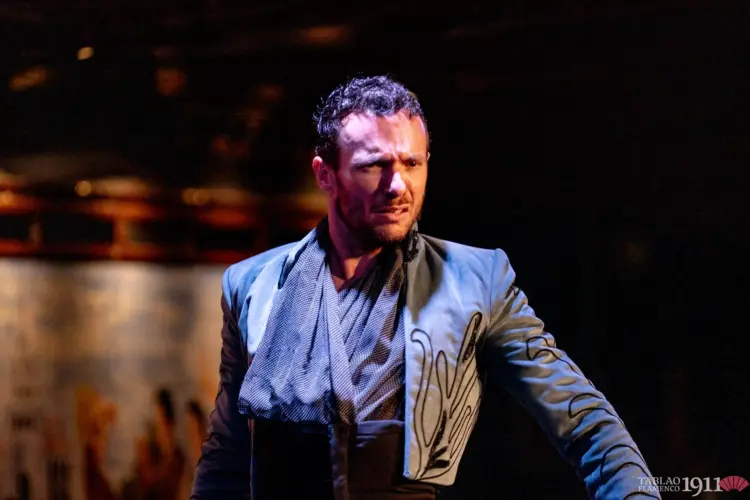
José Maya on stage at Tablao Flamenco 1911
This week, one of the most powerful names in contemporary flamenco shines once again on our stage: José Maya.
12 October
Juan Carlos Avecilla: the force of Cádiz in the Cathedral of Flamenco
Only the greats set foot on the oldest stage in the world. The force of Cádiz in Juan Carlos Avecilla, just a couple of metres from you.
From 12 to 18 October
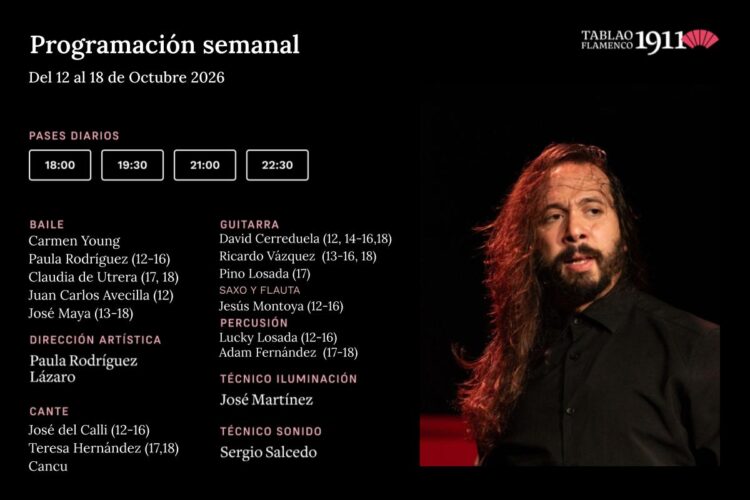
Flamenco Madrid Daily Show
This week, our flamenco ensemble renews itself to offer you an experience full of nuances and overflowing talent.
From 12 to 18 October
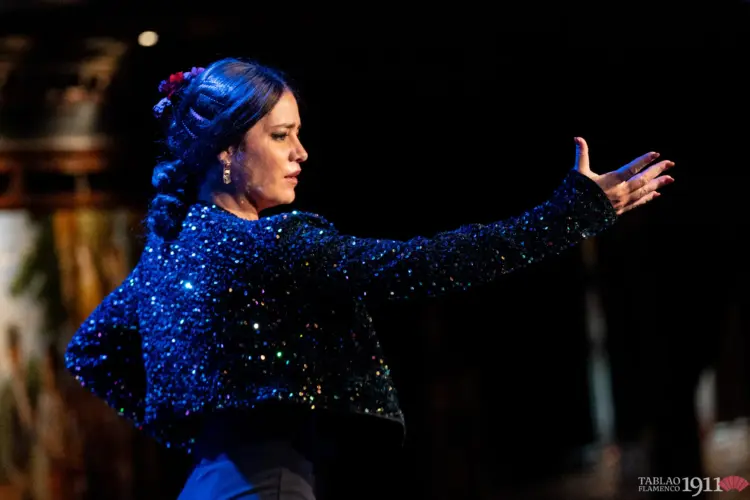
Carmen Young: elegance turned into dance at Tablao 1911
She crossed an ocean to learn to dance flamenco. Today she dances it with an elegance that can't be taught.
From 12 to 16 October
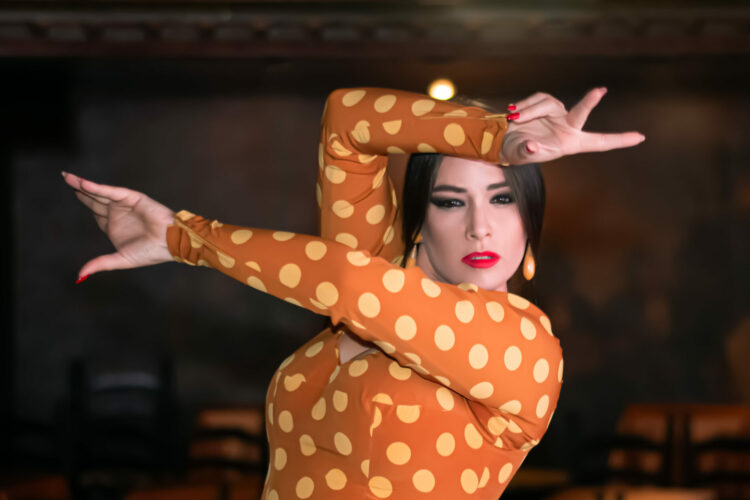
Paula Rodríguez returns to 1911
Paula Rodríguez, pure passion, strength, and elegance!
From 17 to 18 October
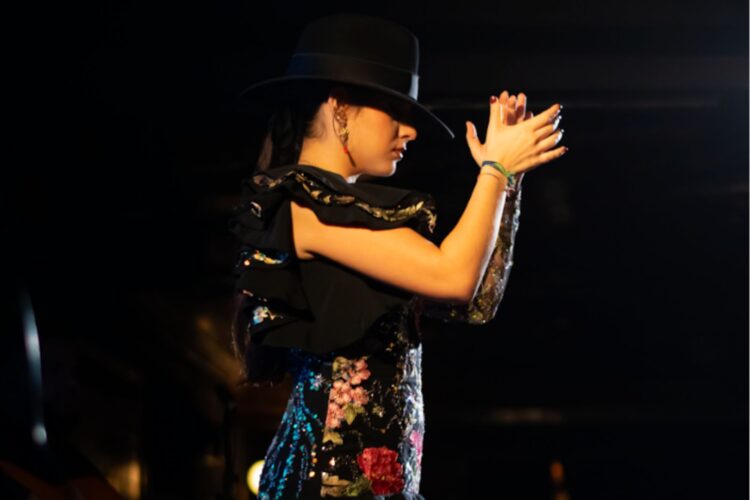
The Old Soul of a New Talent: Claudia de Utrera
We invite you to discover the strength and maturity of Claudia de Utrera, a dancer who proves that art