Cafés Cantantes: The Origin of Flamenco Tablaos
To know and understand the true history of flamenco tablaos, we must forget tavern myths and legends; we must look at the facts. Before filling international theaters, deep flamenco was a marginalized expression, hidden in smithies and neighborhood courtyards. For flamenco to become the universal phenomenon it is today, it needed a foundational stage. That first great showcase was the cafés cantantes.
What were cafés cantantes in flamenco?
The answer marks the greatest turning point in the history of this art: they were the first nightlife venues where flamenco became public and, most importantly, professional.
Until the mid-19th century, artists performed out of pure passion or in exchange for an invitation to private parties. With the opening of these establishments, performers began to earn a fixed salary for their talent.
Flamenco in cafés cantantes ceased to be a simple popular release. It demanded that singers, dancers, and guitarists perfect their technique night after night in front of an audience that paid for a ticket and demanded maximum quality.
The birth of cafés cantantes in the 19th century
To understand the origin of flamenco cafés cantantes, we must look at key dates. Although there are records of early venues around 1846, the true explosion occurred in 1881, when the mythical singer Silverio Franconetti opened his own venue in Rosario Street, Seville.
Franconetti had a revolutionary vision: to dignify deep flamenco and bring it to all audiences. His boldness forever marked the evolution of 19th-century flamenco. Soon, Madrid, Malaga, Jerez, and Barcelona replicated the model. This triggered the so-called “Golden Age of Flamenco” (1860-1920), a period of creative effervescence that defined the structure of the styles we hear today.
What cafés cantantes were like: atmosphere and experience
The atmosphere of these venues was designed to captivate the spectator. They were large salons decorated with enormous mirrors, marble tables, and gas lamps. While attendees drank, a small wooden stage rose at the back.
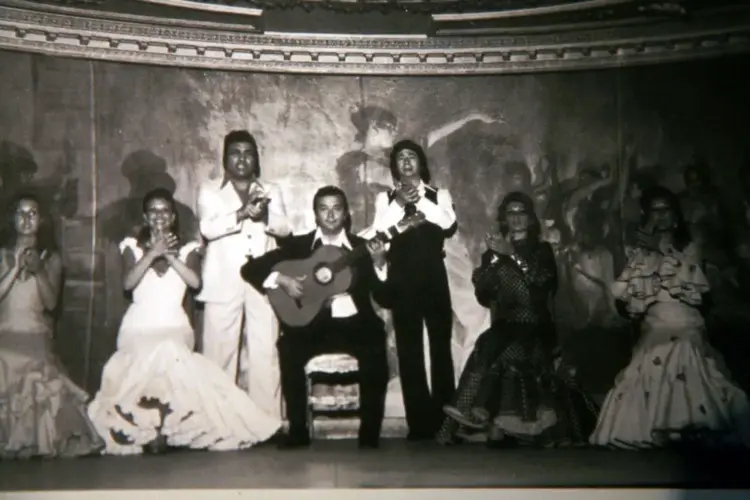
It was exactly on those boards where the “cuadro flamenco” was invented, uniting guitar playing, singing, and dancing for the first time.
Furthermore, these cafés achieved something unthinkable for the time: breaking social barriers. Aristocrats, intellectuals, bourgeois, and workers sat side by side in rush chairs to worship the first great stars, such as Antonio Chacón or La Macarrona. The competition was so fierce that it forced artists to reach unparalleled technical virtuosity.
From cafés cantantes to the flamenco tablao
Every cycle evolves. From 1920 onwards, the emergence of cinema and large theaters led to the closure of cafés cantantes. However, their DNA never disappeared. In the 1950s, the intimate, raw, and demanding spirit of those salons resurfaced strongly, marking the definitive origin of the flamenco tablao.
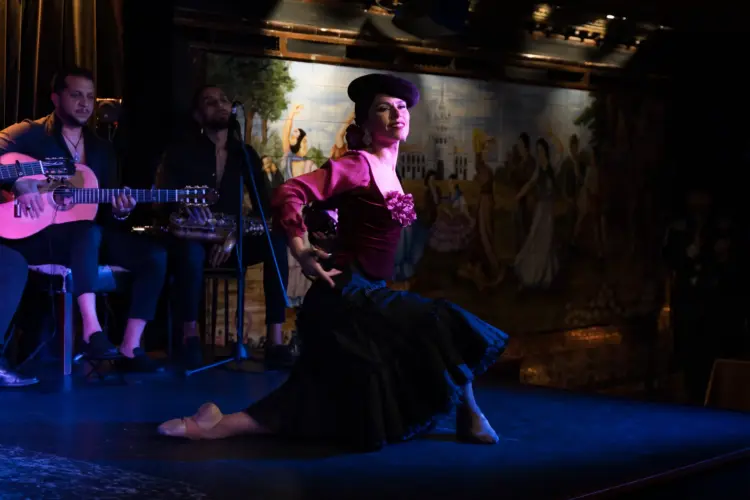
Modern tablaos inherited the closeness, passion, and structure of the original “cuadro”, but elevating the stage performance requirements. If you want to know what is a flamenco tablao? by experiencing it firsthand, we invite you to visit us.
Feel the vibration of the wood and the truth of the rhythm just meters away from the artists in the oldest tablao in the world. Witness a rite that has been written every night for over a century.
Featured posts
Flamenco shows

From 13 to 18 October
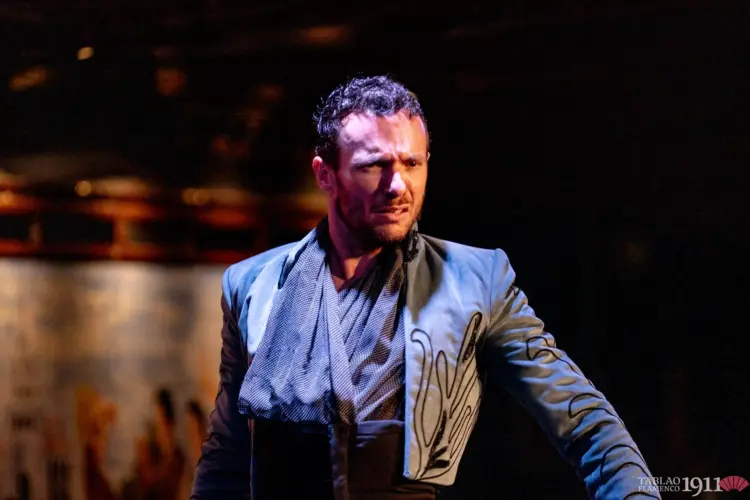
José Maya on stage at Tablao Flamenco 1911
This week, one of the most powerful names in contemporary flamenco shines once again on our stage: José Maya.
12 October
Juan Carlos Avecilla: the force of Cádiz in the Cathedral of Flamenco
Only the greats set foot on the oldest stage in the world. The force of Cádiz in Juan Carlos Avecilla, just a couple of metres from you.
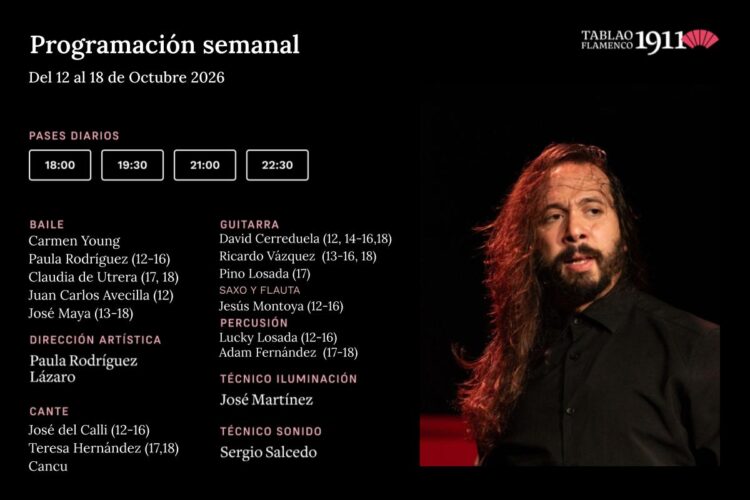
From 12 to 18 October
Flamenco Madrid Daily Show
This week, our flamenco ensemble renews itself to offer you an experience full of nuances and overflowing talent.
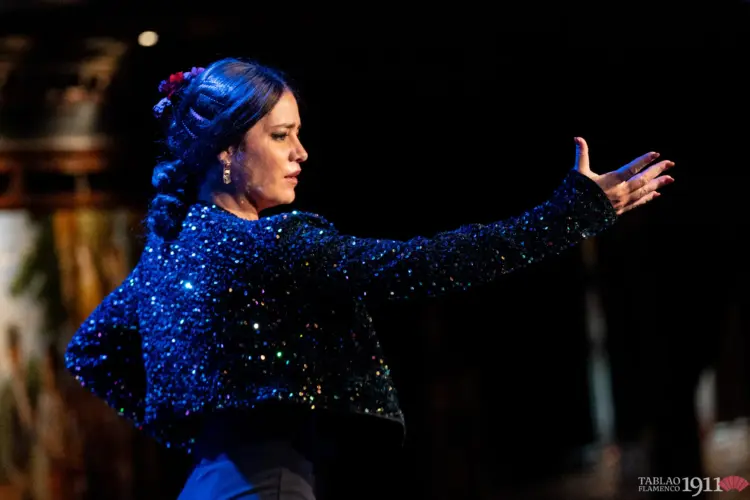
From 12 to 18 October
Carmen Young: elegance turned into dance at Tablao 1911
She crossed an ocean to learn to dance flamenco. Today she dances it with an elegance that can't be taught.
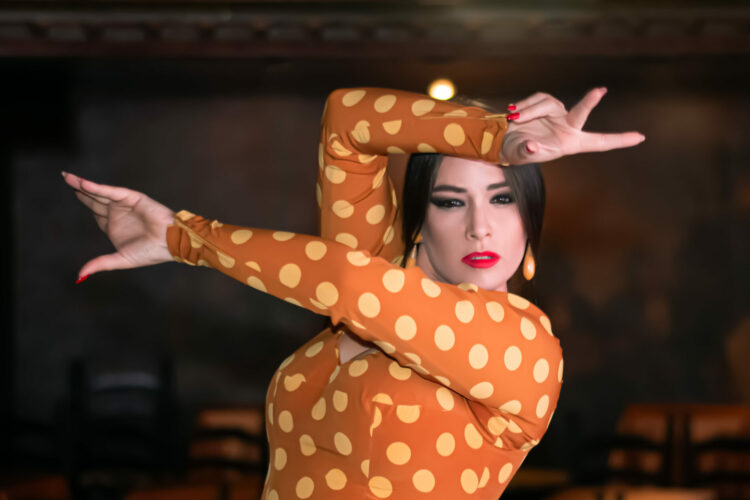
From 12 to 16 October
Paula Rodríguez returns to 1911
Paula Rodríguez, pure passion, strength, and elegance!
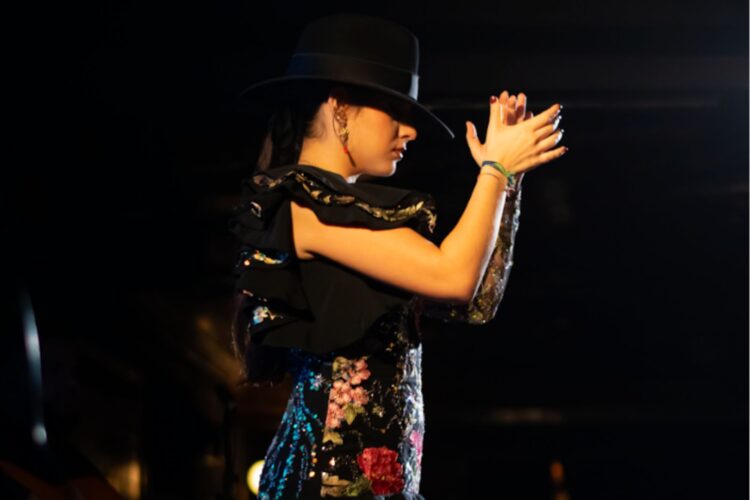
From 17 to 18 October
The Old Soul of a New Talent: Claudia de Utrera
We invite you to discover the strength and maturity of Claudia de Utrera, a dancer who proves that art