The history of flamenco in Madrid
When we think of the first chords of jondo art, the mind automatically travels to Andalusia. However, to understand how this singing became truly universal, one must look towards the center of the map.
The history of flamenco in Madrid is not that of a simple spectator; it is the history of the stage that catapulted the greatest. Understanding how the capital embraced this art is discovering why today you cannot succeed in the rhythm without having stepped on its boards first.
Flamenco in Madrid: origin and early spaces
In the mid-19th century, the arrival of the railway brought to the city a huge wave of Andalusians traveling with their customs, their guitars, and their laments on their backs.
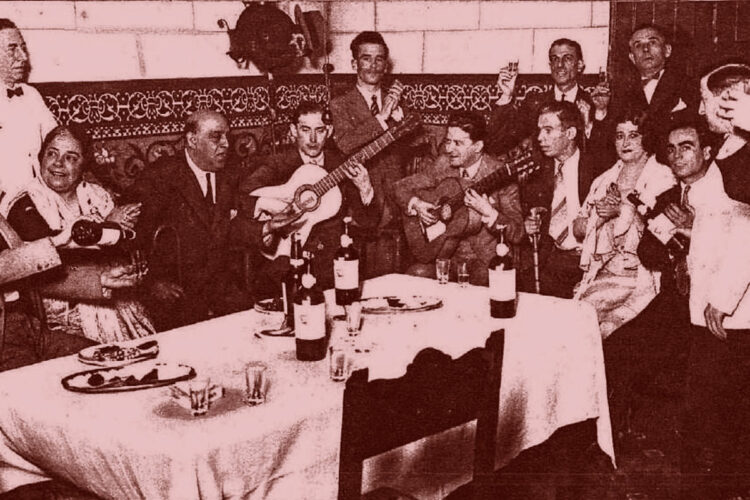
To look for the flamenco origin Madrid is to delve into the old corralas and the dive bars of traditional neighborhoods like Lavapiés. In these intimate spaces, art was not a spectacle, it was a form of relief and survival. Curiously, this raw force soon seduced not only the Madrid bohemian scene, but also the very aristocracy, who began to seek the authenticity of the gypsy night.
The Golden Age of flamenco and its impact on the capital
At the end of the 19th century and the beginning of the 20th, the singing stopped being an open secret. We enter the so-called golden age of flamenco, a stage of absolute splendor where artists went from taverns to illuminated stages.
Madrid became the ultimate magnet. If you had talent, you had to come to the capital. The city acted as a gigantic sounding board that polished the wild talent of the artists from the south, giving them the prestige, the contracts, and the respect they needed to live exclusively from their art.
Madrid flamenco in the 20th century
The true turning point arrived in the past century. Flamenco in Madrid of the 20th century is synonymous with eternal dawns and an industry that changed the rules of music in Spain.
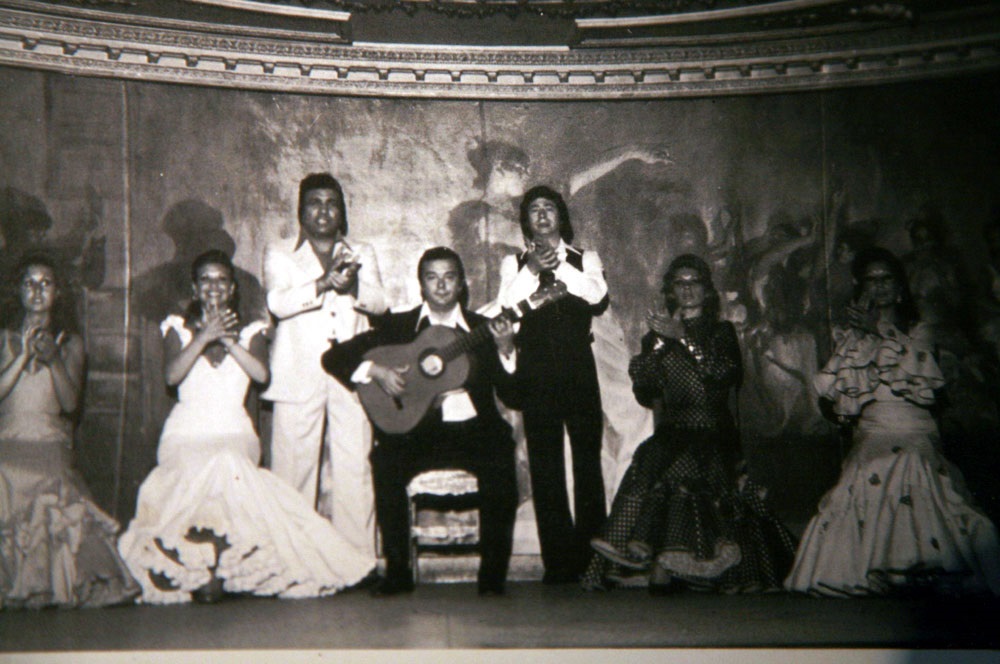
The master Antonio Arenas performing at the old Tablao Villa Rosa.
Singing cafes and early tablaos
The live format evolved. The old and noisy “Cafés Cantantes” gave way to the tablaos, venues designed specifically to listen to the footwork and the guitar in an almost religious silence. These new sanctuaries consecrated the figure of the flamenco artist, finally separating jondo art from mere background entertainment.
Madrid as a national and international showcase
In the 50s and 60s, Madrid transformed into the world capital of the night. Hollywood stars like Ava Gardner or Gary Cooper, writers, politicians and international high society landed in the city looking for the passion of the tablaos. It was here, between smoke and guitars, where jondo art demonstrated that it had the visceral strength to move any culture, laying the foundations to be declared flamenco heritage of humanity.
Flamenco in Madrid today: tradition and continuity
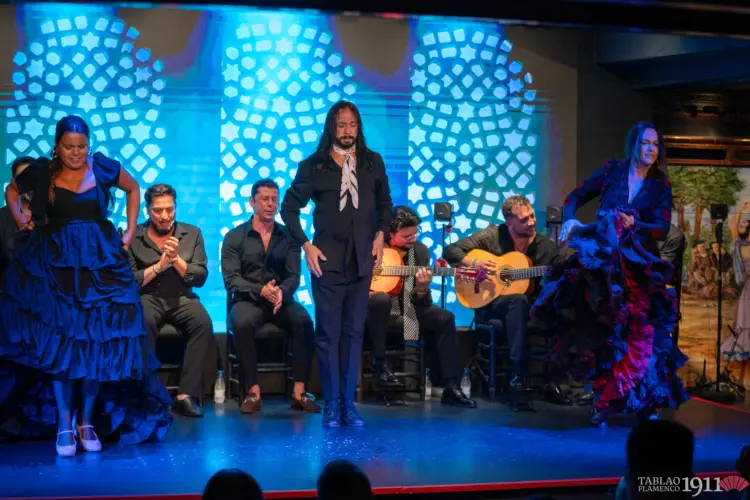
Today, history has not stopped. The historical tablaos of the city continue to maintain the same demand, the same sweat and the same purity that attracted the stars decades ago. Madrid continues to be the litmus test for any purebred artist.
Reading about this golden age is fascinating, but the duende is not understood in a text: it is felt when the singer breaks their voice two meters away from you. Don’t let them tell you about it. Feel the weight of this heritage and come live it live at the Tablao Flamenco 1911; you can buy flamenco tickets today and secure your place in the living history of Madrid.
Featured posts
Flamenco shows
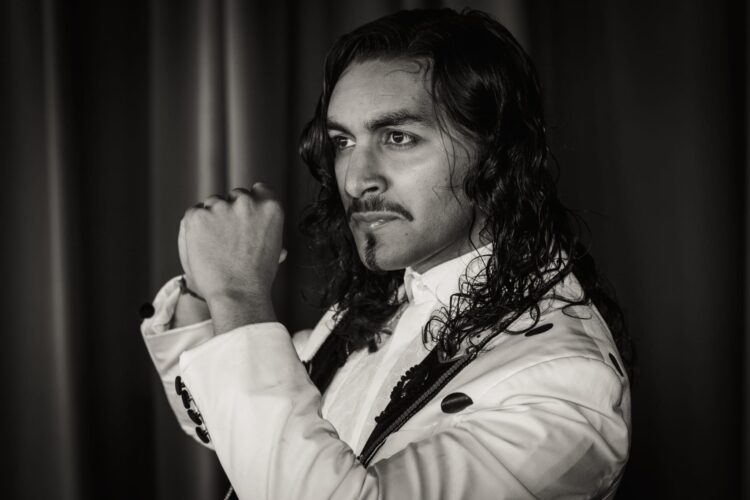
From March 30th to April 2nd
Polito arrives at Tablao Flamenco 1911
Polito, the Farruco dancer who taught Rosalía how to dance.
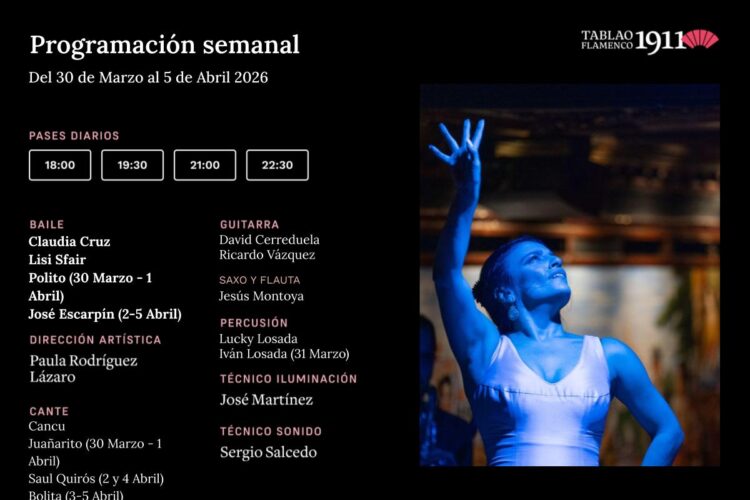
From March 30th to April 5th
Flamenco Madrid Daily Show
This week, our flamenco ensemble renews itself to offer you an experience full of nuances and overflowing talent.
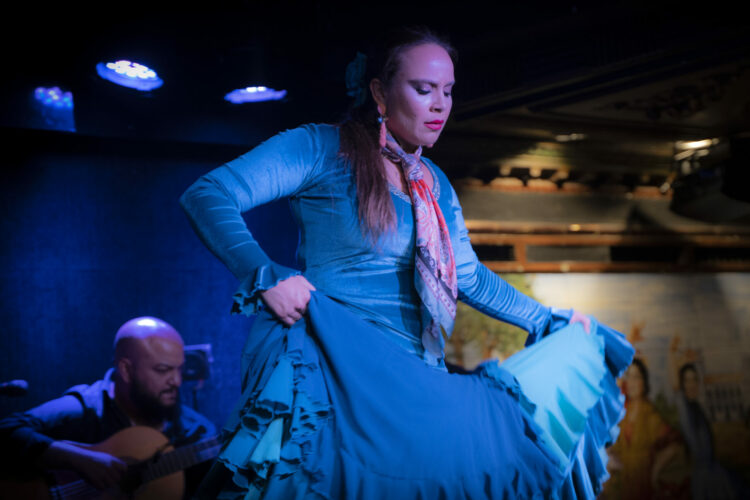
From March 30th to April 5th
The princess of Cádiz, Claudia Cruz
Claudia Cruz: Cádiz elegance turned into flamenco
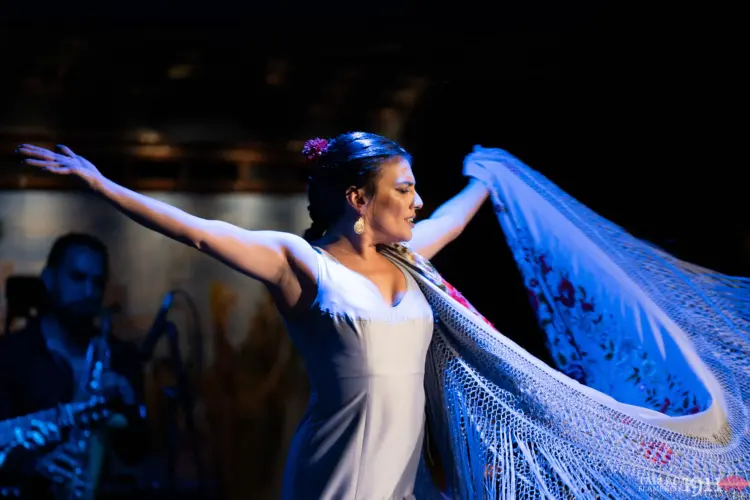
From March 30th to April 5th
Lisi Sfair, an International Artist, arrives on our stage.
This week, Tablao Flamenco 1911 welcomes an artist who doesn’t just dance — she conquers.
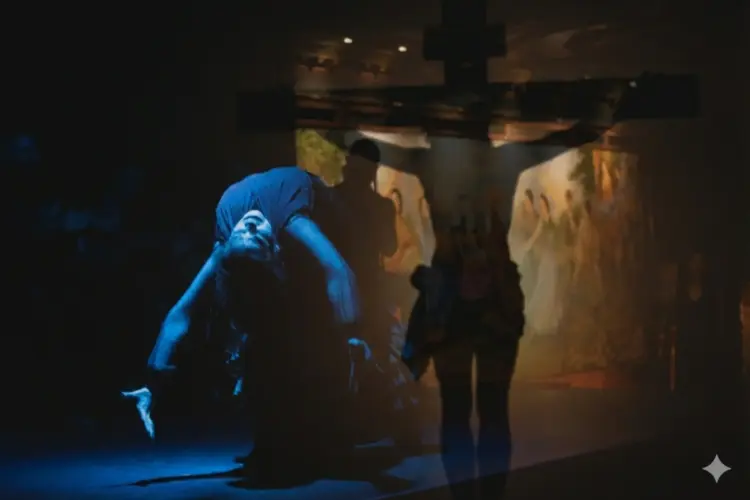
From March 29 to April 5
Easter in Madrid: Tablao Flamenco 1911 at Plaza Santa Ana
Madrid changes completely during Holy Week. The smell of incense and the beating of drums fill the streets, but when...
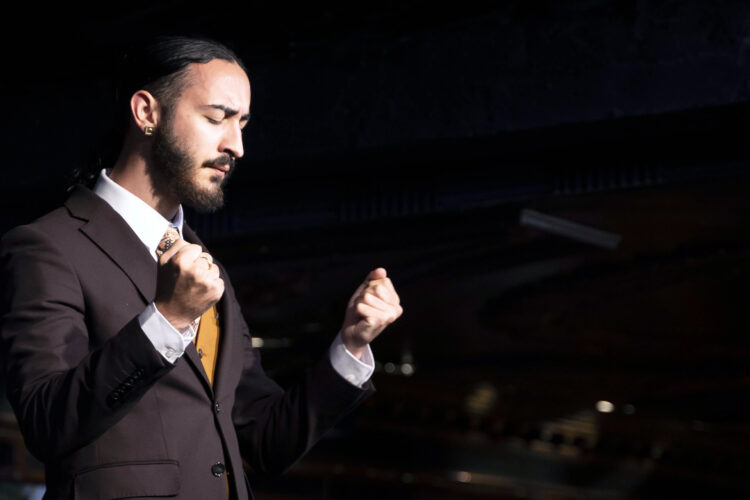
From April 3rd to 5th
José Escarpín and his Guinness World Record at Tablao Flamenco 1911
The Guinness World Record of flamenco arrives at the oldest flamenco tablao in the world: Tablao Flamenco 1911.