The guitar in flamenco: the strings that give life to jondo art
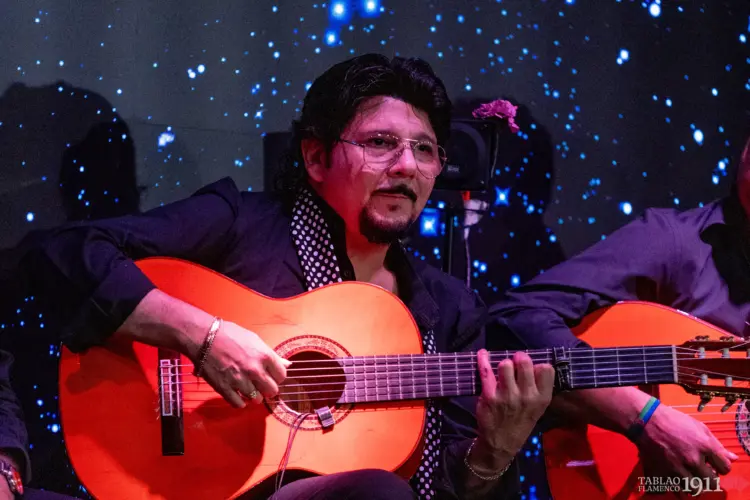
If you close your eyes and think of jondo art, the first thing you hear in your mind is not a voice. It is the dry and deep strumming of some strings.
Before the singer opens their mouth or the dancer strikes the first heel tap, the wood has already set the ground. Understanding the role of the guitar in flamenco is discovering the hidden engine that makes an entire tablao beat. Without it, the singing and dancing would walk blindly.
What is the flamenco guitar?
At first glance, it might look like a traditional classical guitar, but as soon as the guitarist sits down, crosses their leg and rests the instrument almost horizontally, you know you are facing a different story.
An authentic flamenco guitar is usually built with cypress wood, which makes it much lighter. Its strings are closer to the neck (with a “low action”). This is not an aesthetic whim; it is a technical necessity that allows for much faster plucking and facilitates exclusive techniques such as the alzapúa or the picado. The result is that bright, percussive and slightly metallic sound that makes you vibrate. It is, literally, a percussion box with strings.
When was the guitar introduced into flamenco?
Curiously, flamenco was born an orphan of instruments. In its origins, in the forges and in the intimacy of homes, it was sung “a palo seco” (with no other accompaniment than handclaps or the striking of knuckles on a table).
The guitar in flamenco did not make its triumphant entrance until the mid-19th century, with the golden age of the Cafés Cantantes. It was then when it went from being a simple musical ornament to becoming the backbone that orders and gives historical meaning to each style.
The role of the guitar in flamenco
The guitar is not there just to give the tuning note. It acts as the orchestra conductor on a stage where the score does not exist and everything flows through intuition and glances.
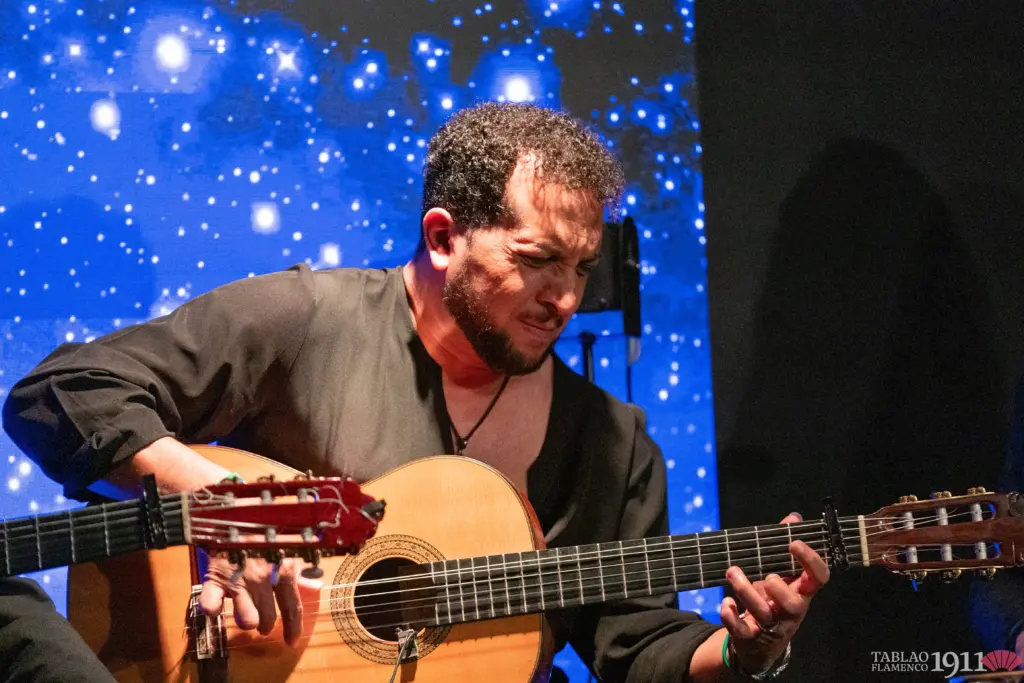
Accompaniment to the singing
The guitarist has one of the most difficult tasks: wrapping the singer without stepping on them. They must listen to their breathing, give them the exact pitch and lay down the musical carpet so that the voice shines and breaks with total freedom. A good accompaniment is one that elevates the singing without stealing the spotlight.
Dialogue with the dance
When the guitar and the dance look at each other, sparks fly. The guitar not only keeps the time, but it answers the calls of the dancer. It is a tense and exciting dialogue where the strumming of the strings and the nails of the shoes chase each other, challenge each other and end up merging in spectacular finishes.
The playing of flamenco as its own language
Beyond accompanying, the guitar has its own moment of glory: the “falsetas”. They are those instrumental spaces where the guitarist demonstrates their virtuosity and their ability to transmit raw emotions. To master this language, the musician must have a millimeter knowledge of the flamenco rhythms, knowing exactly when to accelerate the pulse and when to let the silence speak.
The guitar in a live flamenco show
The magic of the guitar cannot be captured in a YouTube video or in a studio record. The acoustic sound of the wood needs the air of a tablao to expand and reach your chest.
The true dimension of this instrument is understood by seeing up close the tension of the fingers, the sweat of the guitarist and the mathematical precision of their movements. We invite you to live this experience of live flamenco at the Tablao Flamenco 1911. Come and discover how six strings are capable of governing a whole night of passion and duende.
Featured posts
Flamenco shows

From April 6 to 12
José Maya on stage at Tablao Flamenco 1911
This week, one of the most powerful names in contemporary flamenco shines once again on our stage: José Maya.
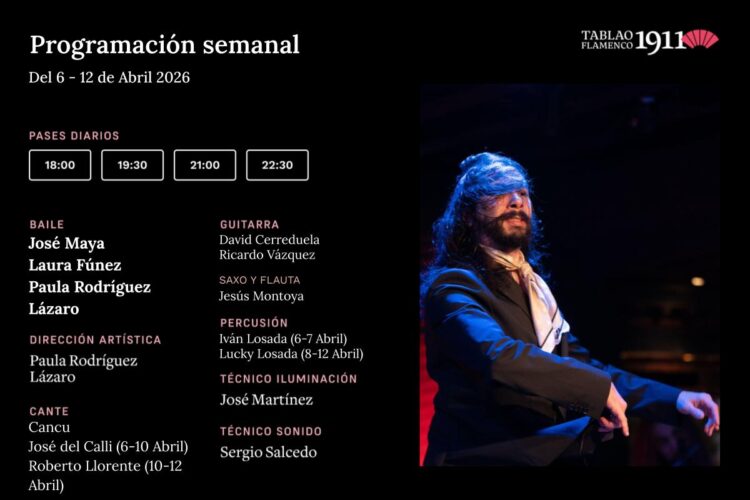
From April 6 to 12
Flamenco Madrid Daily Show
This week, our flamenco ensemble renews itself to offer you an experience full of nuances and overflowing talent.
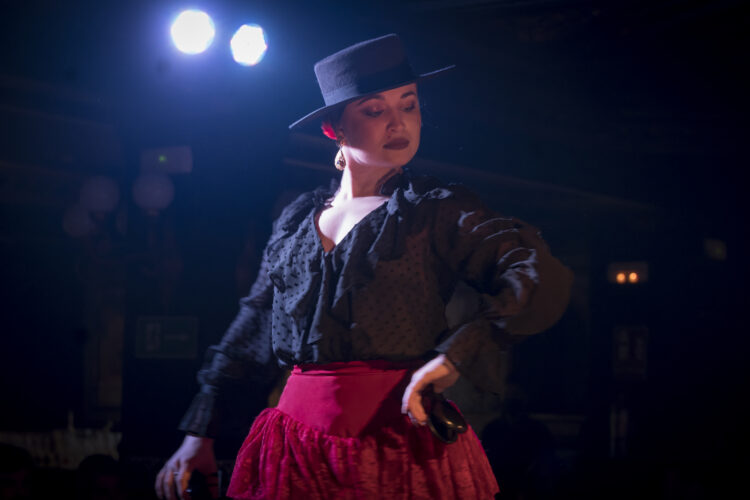
From April 6 to 12
Laura Fúnez and the Escuela Bolera
Escuela Bolera, strength and elegance on stage.
From April 6 to 12
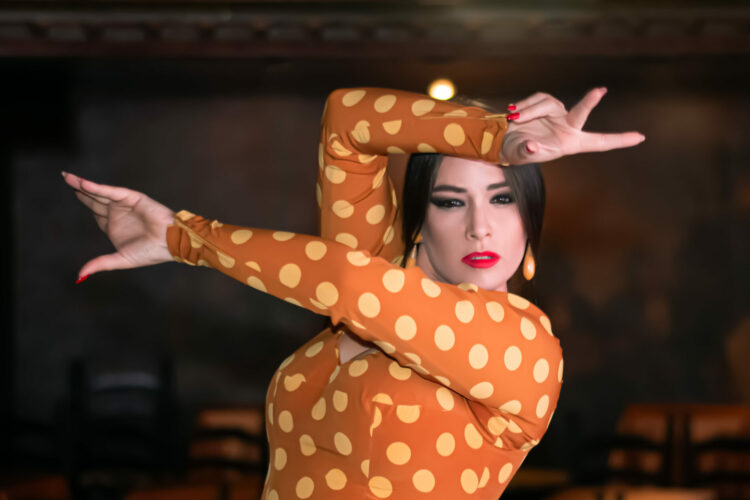
Paula Rodríguez returns to 1911
Paula Rodríguez, pure passion, strength, and elegance!
From April 17 to April 19
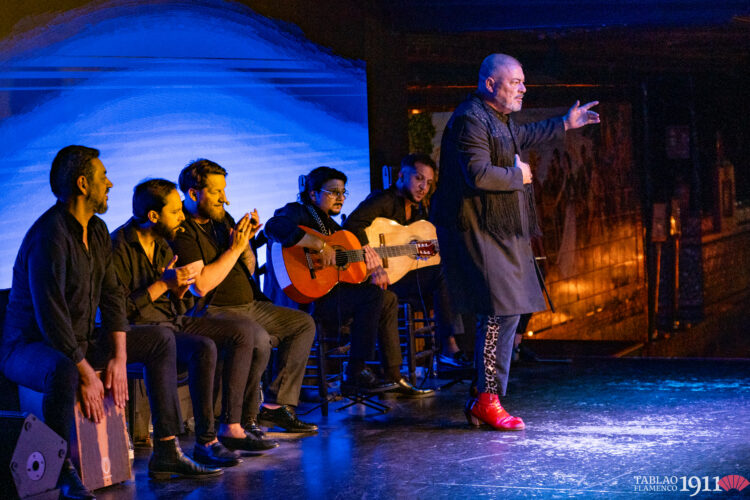
Antonio Canales at Tablao 1911 at 9:00 PM and 10:30 PM
The Master returns. Antonio Canales at Tablao Flamenco 1911.