Flamenco sagas: historical heritage of the flamenco family
If you have ever wondered why flamenco is capable of moving you to tears without understanding a single word, the answer is not in the technique. It is in the genetics.
Flamenco is not studied like a degree; it is absorbed in the home kitchen, in celebrations and in the silence of the forges. When you listen to an artist of pure lineage, you do not hear an individual voice, but the echo of an entire lineage that has guarded the rhythm for centuries.
Why the flamenco family is the only real “conservatory”
Forget about sheet music. The flamenco survives thanks to a human chain of memory and instinct. The flamenco family functions as a living museum where the duende is protected from commercialization and oblivion, guaranteeing that each “quejío” maintains its original truth.
The art of learning to live in rhythm
In these houses, a child interiorizes the rhythm even before learning to read. This transmission is not academic, it is purely emotional, passing from elders to children as the family’s most valuable legacy. If you want to understand where it all began, we invite you to explore the origin of flamenco.
The surname: a seal of authenticity and a burden
Carrying an illustrious name on the poster is a double-edged sword. It is a privilege that opens doors, but it also demands a responsibility and a purity that only the chosen ones can sustain over the boards of a tablao.
Montoya Family: the architects of the modern guitar
The flamenco guitar as we know it today owes its existence to the Montoya family. It was Ramón Montoya who took the guitar out of the accompaniment to turn it into a solo concert instrument. His legacy continues today in figures that mix that classical root with the bravest avant-garde.
Montserrat Family: the passion that crosses borders
Flamenco does not understand geography, it understands dedication. The Montserrat family represents that phenomenon where the respect for tradition becomes an absolute way of life, demonstrating that the commitment with the tablao can create new and powerful artistic heritages.
Carmona Family: the masters of evolution
To speak of the Carmona family is to speak of the perfect union between Granada and the world. They are responsible for making flamenco dare to look other genres in the face. They led the “nuevo flamenco” revolution without ever letting go of the thread of purity, proving that it is possible to innovate without betraying the ancestors.
Amaya Family: the strength of “La Capitana”
This saga is synonymous with fire. The Amaya family changed the rules of dance forever thanks to Carmen Amaya. She was the woman who introduced a speed and foot power that was previously reserved only for men, breaking the mold from the barracks of Barcelona to the grand theaters of New York.
The Habichuela Family: the aristocracy of guitar playing
If you are looking for the definition of elegance on the guitar, you will find it in the Habichuela family. Their hands have served as a red carpet for the greatest singers in history. Their touch is wise, gypsy, and essential, making them today the absolute reference for any guitarist wanting to achieve mastery.
The sagas today: come feel the living tradition
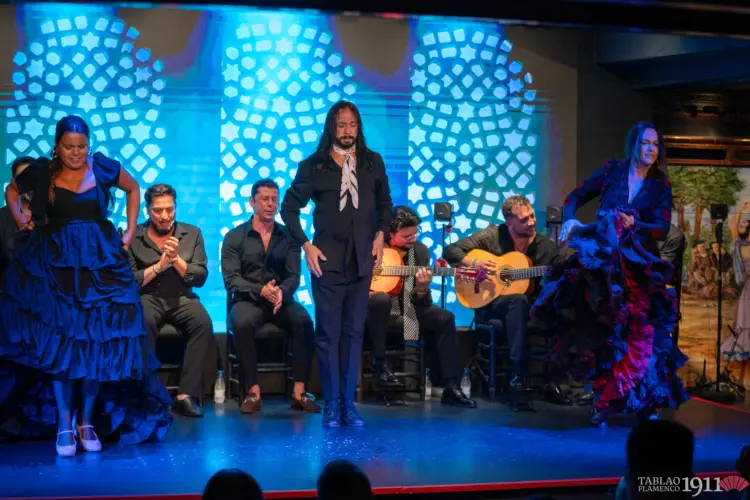
Flamenco dynasties are not legends of the past; they are artists who are still sweating through their shirts on stage today. It is an unbroken chain because the hunger for art is stronger than time.
Don’t let them just tell you about it. Feel the vibration of this legacy in our Father’s Day show. It is the perfect opportunity to see how family heritage takes absolute control of the stage. We wait for you at Tablao Flamenco 1911.
Featured posts
Flamenco shows
From March 30th to April 2nd
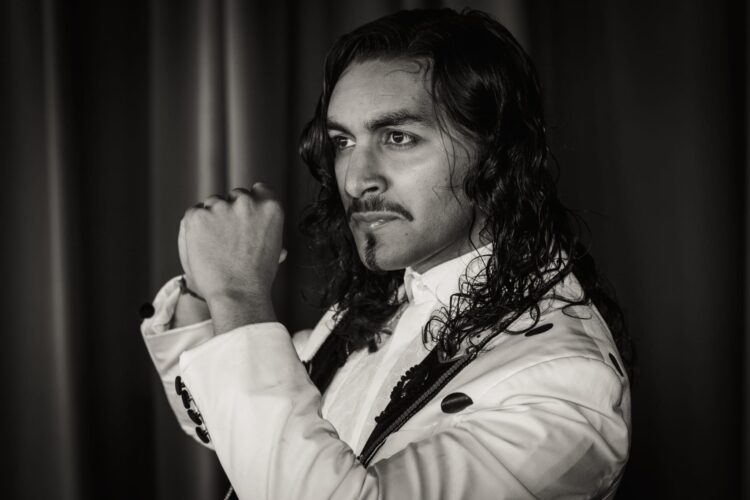
Polito arrives at Tablao Flamenco 1911
Polito, the Farruco dancer who taught Rosalía how to dance.
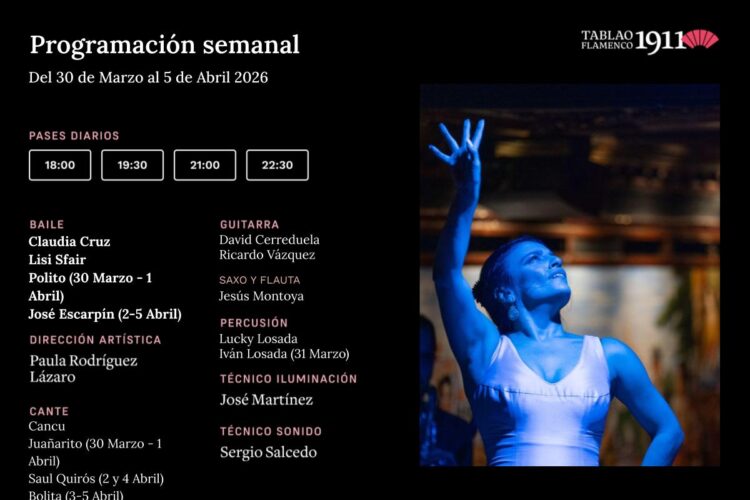
From March 30th to April 5th
Flamenco Madrid Daily Show
This week, our flamenco ensemble renews itself to offer you an experience full of nuances and overflowing talent.
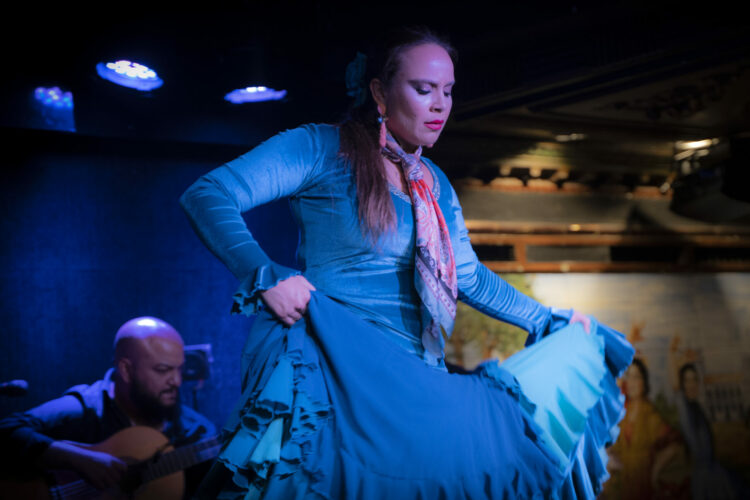
From March 30th to April 5th
The princess of Cádiz, Claudia Cruz
Claudia Cruz: Cádiz elegance turned into flamenco
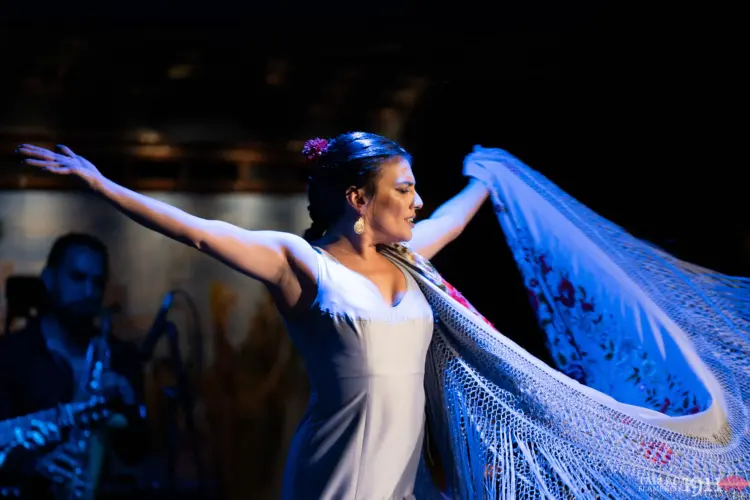
From March 30th to April 5th
Lisi Sfair, an International Artist, arrives on our stage.
This week, Tablao Flamenco 1911 welcomes an artist who doesn’t just dance — she conquers.
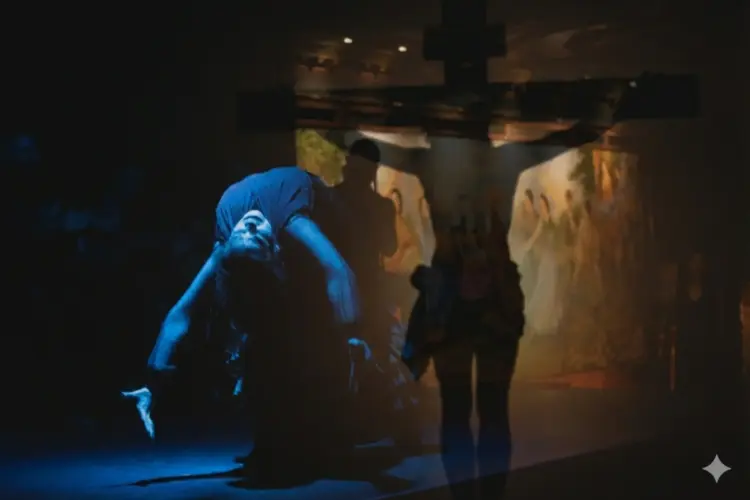
From March 29 to April 5
Easter in Madrid: Tablao Flamenco 1911 at Plaza Santa Ana
Madrid changes completely during Holy Week. The smell of incense and the beating of drums fill the streets, but when...
From April 3rd to 5th
José Escarpín and his Guinness World Record at Tablao Flamenco 1911
The Guinness World Record of flamenco arrives at the oldest flamenco tablao in the world: Tablao Flamenco 1911.