The Saeta: The Sacred Song of Flamenco
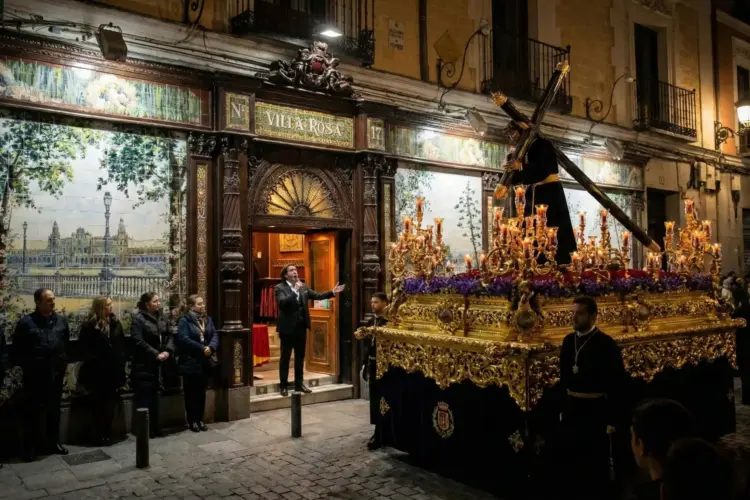
When spring arrives, Spain sounds different. Amid the rolling of the drums, a solitary voice emerges that cuts through the air and silences the crowd. It is the saeta, one of the most heartrending and beautiful expressions of our culture.
But what exactly is it, and why does it move us so deeply? In this article, we explore the profound connection between this chant and arte jondo.
Origin of the Holy Week Saeta: Passion and “quejío”
The Holy Week saeta is not a simple song; it is an arrow launched into the air. It was born in the street, as a spontaneous prayer of the common people directed at the images of the Passion.
Although its roots are ancient and mixed—blending calls to Arabic prayer, Jewish psalmody, and Christian missionary chants—the saeta we know today is a direct descendant of flamenco. It is the moment when pain and devotion find their outlet in the throat of the singer.
Why is it called saeta? The meaning of this chant
The term saeta comes from the Latin sagitta, meaning arrow. In its origin, this chant was understood as a prayer hurled into the air, direct and without intermediaries, addressed to the images of Christ or the Virgin during Holy Week.
Like an arrow, the saeta is born from silence, pierces the crowd, and seeks to move both the singer and the listener, becoming one of the most intense expressions of religious flamenco.
The Flamenco Saeta: When singing becomes prayer
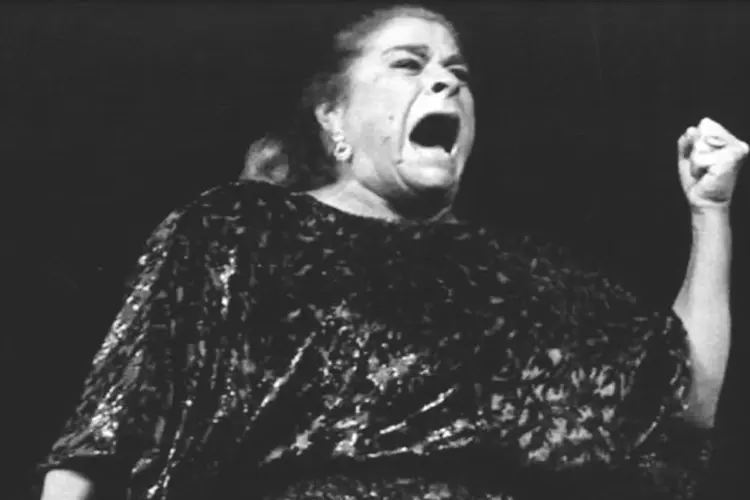
At the beginning of the 20th century, the saeta became “aflamencada.” The great masters began to impose the melismas and technical difficulty of cante jondo. Thus, the flamenco saeta was born—an art form that requires extraordinary power and feeling, as it is performed a palo seco (without guitar).
Not just any singer dares to face it. It is a confrontation alone with silence, where the artist must break their own voice to transmit the suffering of the Virgin or of Christ.
From Machado’s Saeta to Martinetes
Culturally, many people know this art thanks to the famous poem “La Saeta” by Antonio Machado, popularized musically by Joan Manuel Serrat. Those verses (“a popular voice once said…”) turned the saeta into a universal hymn.
However, in the world of pure flamenco, the saeta evolved through solemn palos. The most common are saetas por seguiriyas and saetas por martinete, styles that were born in forges and prisons, charged with a gravity that perfectly fits the atmosphere of Holy Week.
Where to listen to authentic flamenco in Madrid this Holy Week
If the saeta is the soundtrack of the street, the tablao is the space where that feeling remains alive beyond the processions. After walking through the center of Madrid and hearing saetas sung to passing brotherhoods, the cultural experience continues on stage.
At Tablao Flamenco 1911, located in the emblematic Plaza de Santa Ana, flamenco during Holy Week preserves that atmosphere of respect, intensity, and emotion that defines these days, offering a performance that connects the tradition of the street with arte jondo in its most authentic form.
Featured posts
Flamenco shows

From April 6 to 12
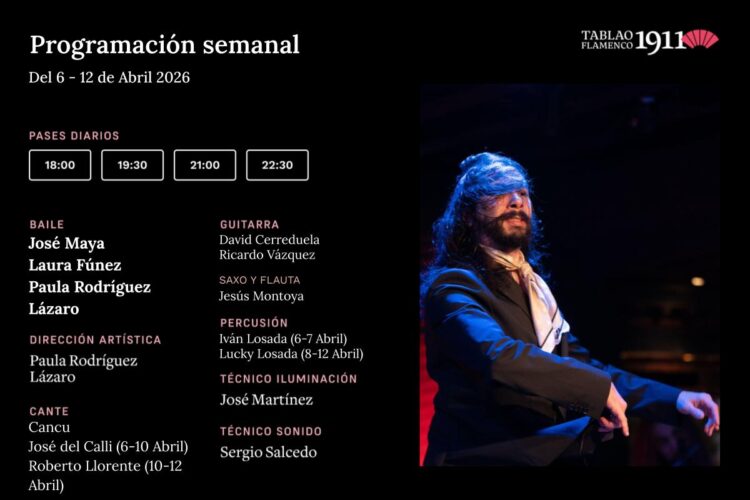
José Maya on stage at Tablao Flamenco 1911
This week, one of the most powerful names in contemporary flamenco shines once again on our stage: José Maya.
From April 6 to 12
Flamenco Madrid Daily Show
This week, our flamenco ensemble renews itself to offer you an experience full of nuances and overflowing talent.
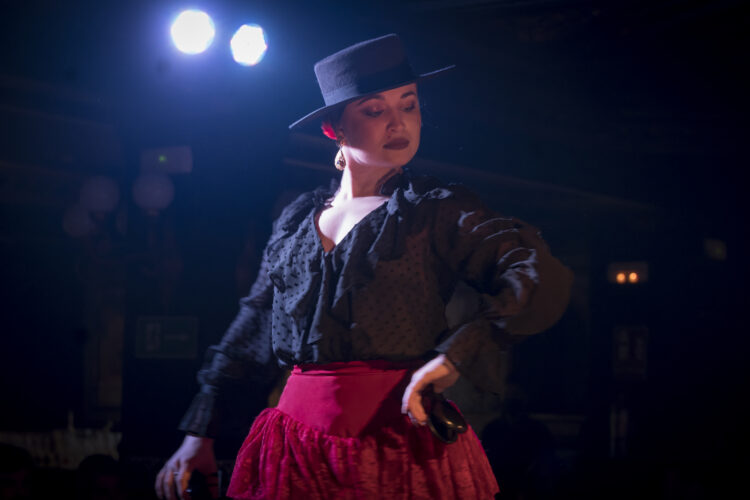
From April 6 to 12
Laura Fúnez and the Escuela Bolera
Escuela Bolera, strength and elegance on stage.
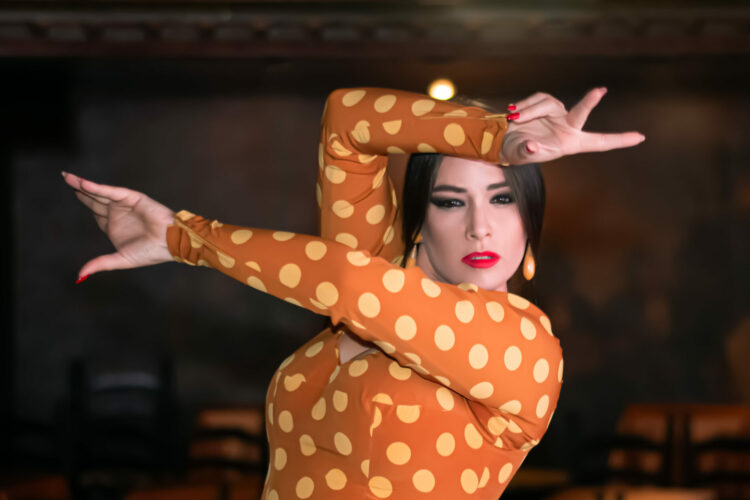
From April 6 to 12
Paula Rodríguez returns to 1911
Paula Rodríguez, pure passion, strength, and elegance!
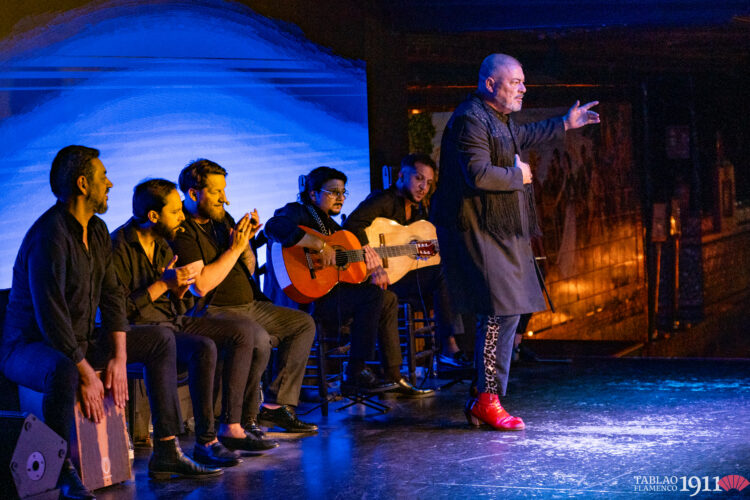
From April 17 to April 19
Antonio Canales at Tablao 1911 at 9:00 PM and 10:30 PM
The Master returns. Antonio Canales at Tablao Flamenco 1911.