Women in Flamenco: History, Evolution and Key Figures
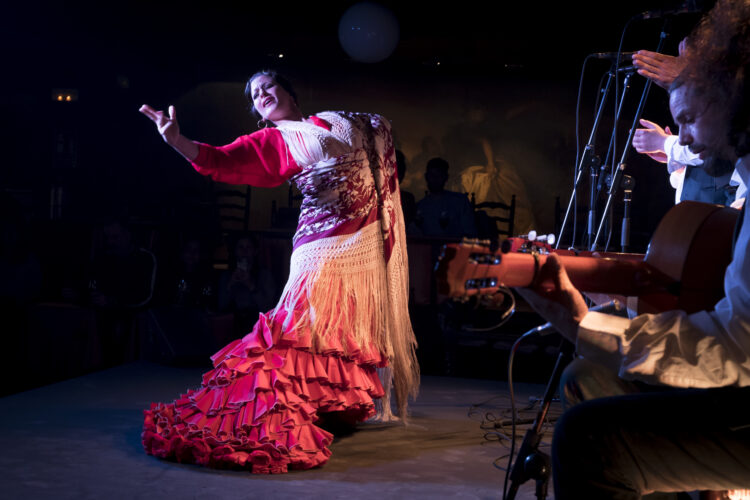
Women have played a fundamental role in the history of flamenco since its origins in the 19th century. Although for a long time their participation was linked to private spaces and limited recognition, their presence has been decisive in the evolution of this art in all its disciplines: singing, dance and guitar.
Over time, flamenco women have conquered new spaces, transformed the artistic language of flamenco and become protagonists of their own history.
The role of women in the origins of flamenco
From the first cafés cantantes to the tablaos of the 20th century, women have been present in the development of flamenco, although within a complex social context. Their participation was essential for the transmission of the art, especially within the family sphere and in popular spaces where flamenco began to take shape.
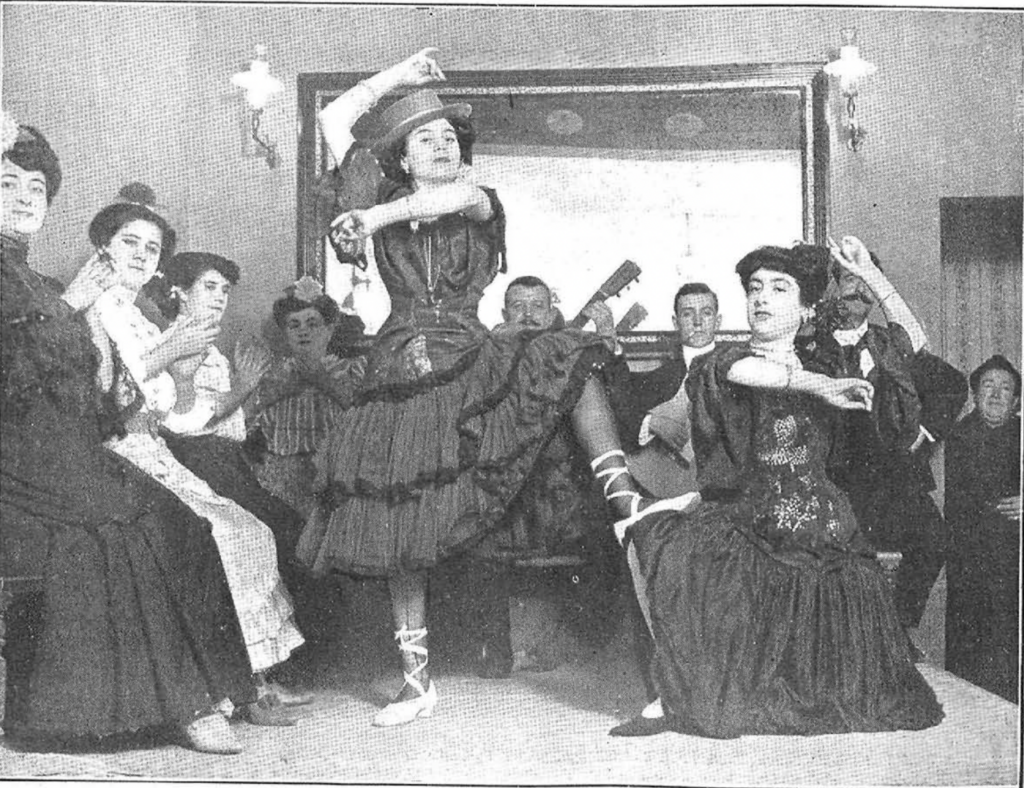
Dance cast on the stage of a singing cafe. Nuevo mundo (Madrid). nº 770 8/10/1908
In 1911, the year in which the current Tablao Flamenco 1911 opened its doors, the situation of women in flamenco reflected the social limitations of the time, but also their enormous creative and expressive capacity.
The evolution of flamenco women in the 20th century
Progressively, women opened a path for themselves in the professional and public sphere of flamenco, managing to conquer new spaces.
Female singers, dancers and guitarists began to occupy a central place on stage, moving from traditional interpretation to their own artistic creation.
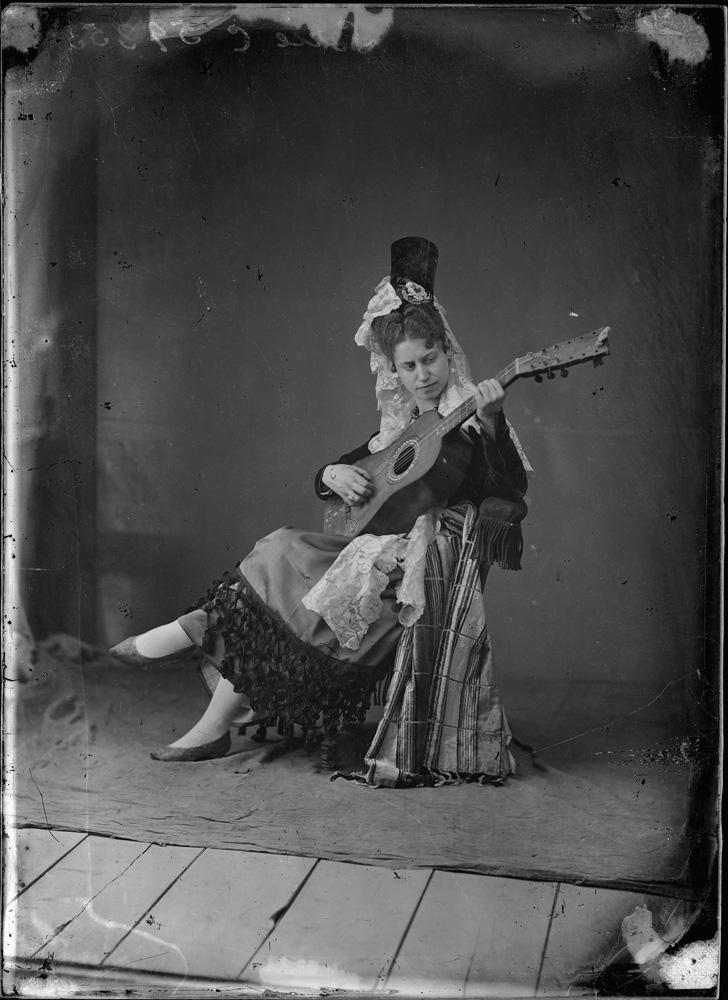
Sevillian lady playing the guitar. E. Gateau/ J.Laurent. 1878.Ruiz Venacci Archive, NIM 17618. Photo library of the Cultural Heritage Institute of Spain. Ministry of Culture.
Figures such as Carmen Amaya marked a turning point in the history of flamenco dance, taking their art beyond the borders of Spain and breaking the established conventions of the time.
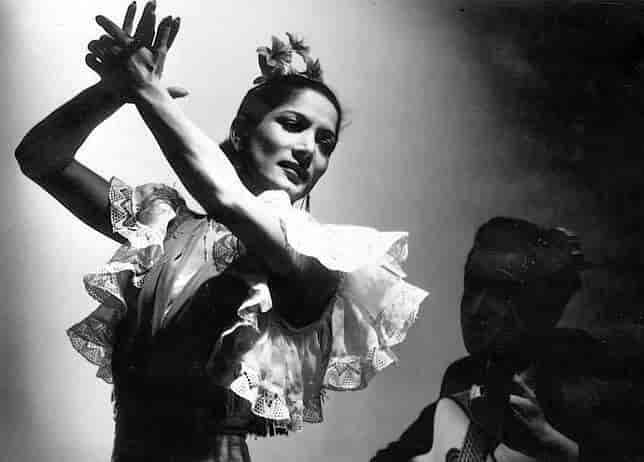
Carmen Amaya. Unknown.
Women in contemporary flamenco: creation, management and transmission
At present, the role of women in flamenco goes far beyond the stage. Dancers, singers and guitarists coexist with promoters, cultural managers, researchers, photographers and teachers who work actively to preserve, study and disseminate this cultural heritage.
Thanks to recent research and new publications, forgotten female figures have been recovered and the perspective on women’s contribution to flamenco throughout its history has been broadened.
🔴 March 2026 Update: To honour this history and celebrate flamenco during International Women’s Week, Tablao Flamenco 1911 presents the cycle “3 Generations”, which will turn this celebration into Women’s Week. A unique performance directed by Premio Desplante winner Paula Rodríguez Lázaro.
Featured posts
Flamenco shows
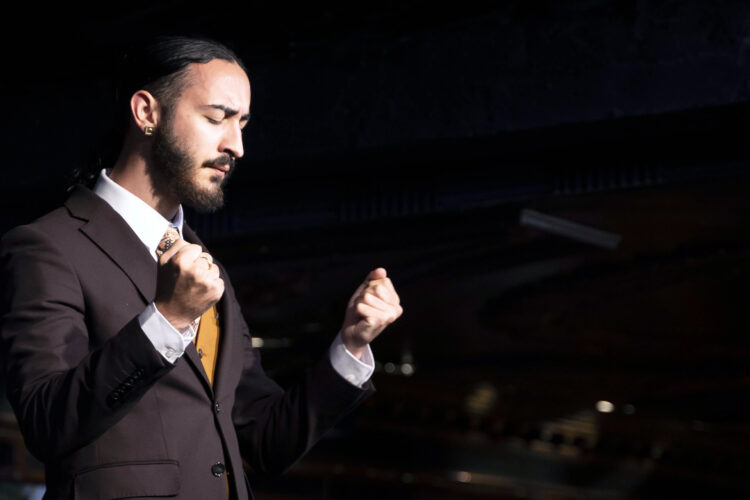
From 19 to 25 October
José Escarpín and his Guinness World Record at Tablao Flamenco 1911
The Guinness World Record of flamenco arrives at the oldest flamenco tablao in the world: Tablao Flamenco 1911.
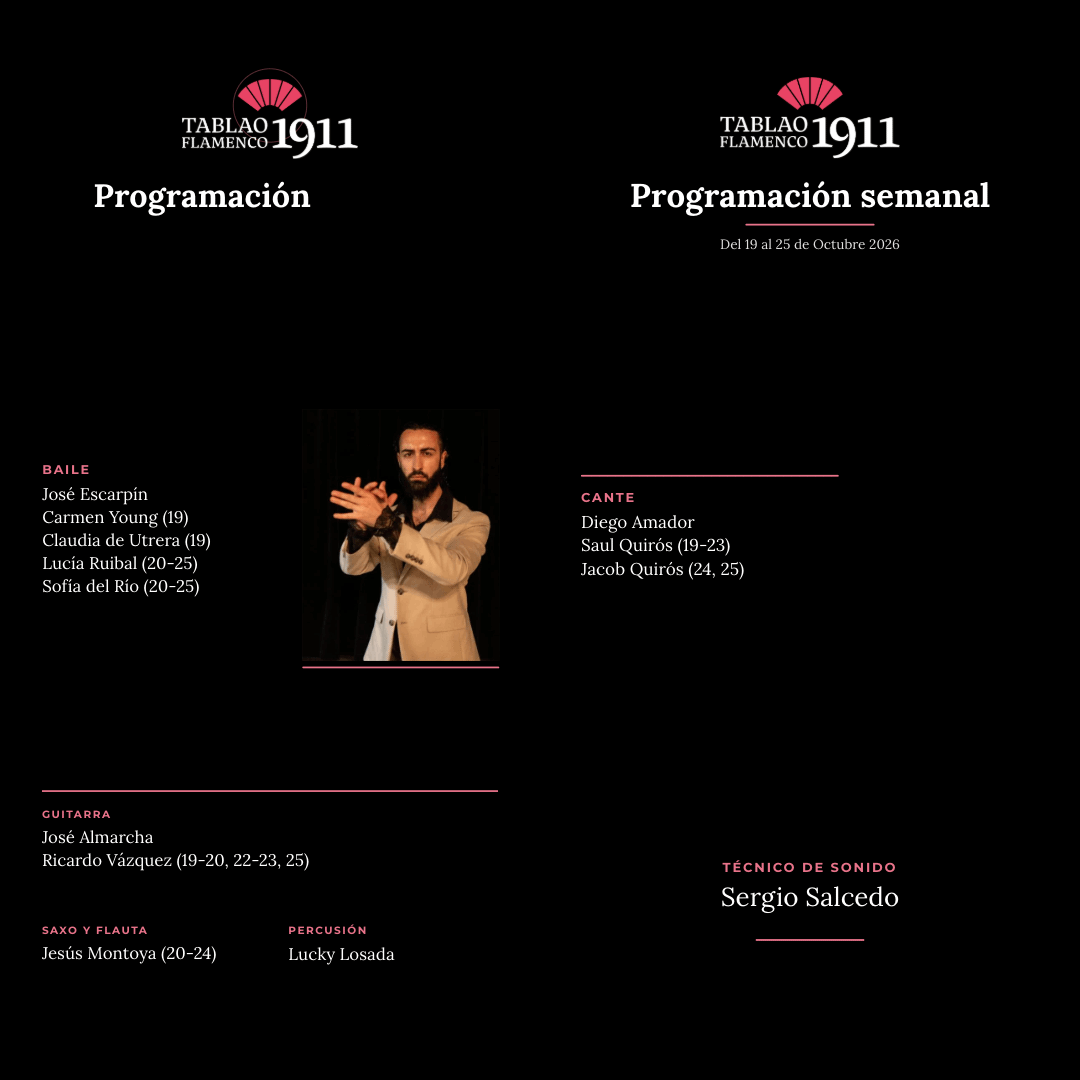
From 19 to 25 October
Flamenco Madrid Daily Show
This week, our flamenco ensemble renews itself to offer you an experience full of nuances and overflowing talent.
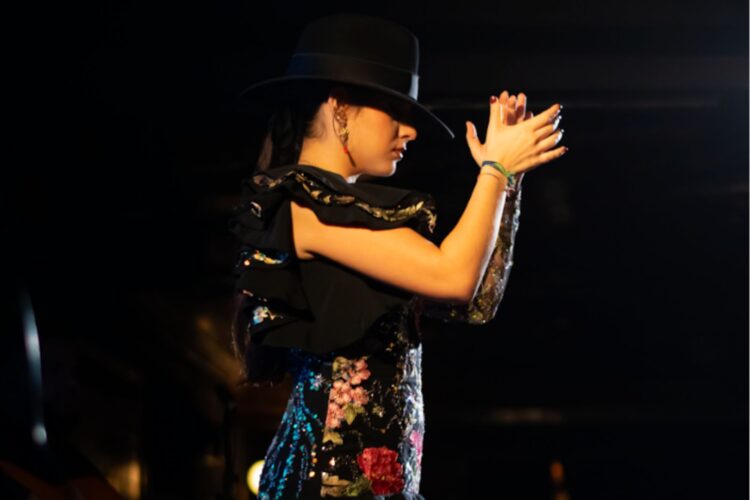
19 October
The Old Soul of a New Talent: Claudia de Utrera
We invite you to discover the strength and maturity of Claudia de Utrera, a dancer who proves that art
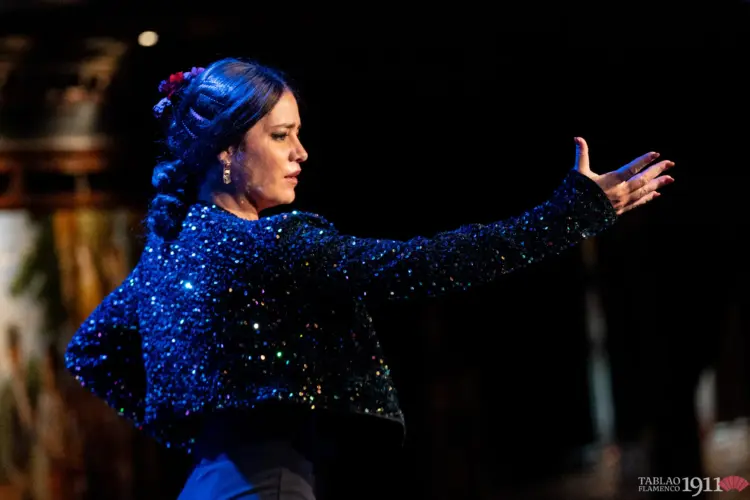
19 October
Carmen Young: elegance turned into dance at Tablao 1911
She crossed an ocean to learn to dance flamenco. Today she dances it with an elegance that can't be taught.